
Staying connected during your Japan adventure is essential for navigating bustling Tokyo streets, translating menus, and sharing those picture-perfect moments from Kyoto’s temples. But with multiple connectivity options available, choosing the right internet solution can feel overwhelming. This comprehensive guide breaks down every option – from modern eSIM technology to traditional pocket Wi-Fi rentals – helping you pick the perfect connectivity solution for your Japan trip.
Whether you’re a tech-savvy solo traveler, a family group, or someone who just needs basic internet access, we’ll explore the pros, cons, and costs of each option to ensure you stay connected without breaking the bank.
Understanding Your Connectivity Options in Japan
Japan offers several ways for visitors to access the internet, each with distinct advantages depending on your travel style, group size, and data needs. The main options include eSIM technology, physical SIM cards, pocket Wi-Fi rental devices, and free public Wi-Fi networks.
The key factors to consider when choosing your connectivity solution are cost, data allowance, device compatibility, ease of setup, and whether you need to share internet with multiple devices or travel companions.
eSIM Technology: The Modern Solution
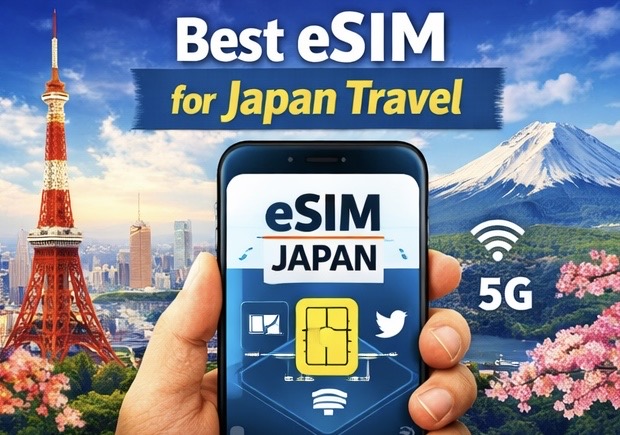
eSIM (embedded SIM) technology represents the newest and often most convenient way to get connected in Japan. This digital SIM card technology eliminates the need for physical SIM swapping and allows you to purchase and activate data plans directly through your smartphone.
Popular eSIM Providers for Japan
Airalo offers some of the most competitive eSIM plans for Japan, with options ranging from 1GB for 7 days ($4.50) to 20GB for 30 days ($37). Their plans work on NTT Docomo’s network, providing excellent coverage across Japan including rural areas.
Holafly takes a different approach with unlimited data plans starting at $19 for 5 days, going up to $99 for 90 days. While marketed as “unlimited,” fair usage policies typically apply after 1-2GB daily usage, with speeds potentially reduced afterward.
Ubigi provides flexible options with plans starting from $4 for 1GB valid for 30 days, up to $30 for 10GB. They partner with local networks to ensure reliable connectivity in major cities and tourist destinations.
| Provider | Plan | Data | Duration | Price | Notes | |
|---|---|---|---|---|---|---|
| Airalo | Discover Japan Best Value | 1 GB | 7 days | $4.50 | Works on iPhone & Android. Easy top-up. | Buy |
| Airalo | Discover Japan Most Popular | 3 GB | 30 days | $11.00 | Great for long stays. | Buy |
| Holafly | Japan Unlimited | Unlimited | 5 days | $19.90 | Unlimited data, no throttling. | Buy |
| Holafly | Japan Unlimited | Unlimited | 30 days | $57.90 | Best for digital nomads. | Buy |
| Ubigi | Japan Data | 1 GB | 30 days | $7.00 | Supports Windows & laptops. | Buy |
| Ubigi | Japan Data | 5 GB | 30 days | $20.00 | Good mid-range option. | Buy |
eSIM Advantages
- Instant activation – purchase and activate before or during travel
- No physical SIM card required
- Keep your original phone number active
- Multiple eSIM profiles can be stored on compatible devices
- Environmentally friendly with no plastic waste
- Usually the most cost-effective for individual travelers
eSIM Disadvantages
- Requires eSIM-compatible device (iPhone XS/XR or newer, recent Android flagships)
- Cannot be shared with other devices
- Troubleshooting can be more complex than physical solutions
- Some older devices may have limited eSIM functionality
Physical SIM Cards: Traditional but Reliable
Physical SIM cards remain a solid choice, especially for travelers with older smartphones or those who prefer tangible solutions they can easily understand and troubleshoot.
Leading Physical SIM Providers
IIJmio is a popular Japanese carrier offering tourist SIM cards with excellent value. Their plans typically start around ¥1,600 ($11) for 6GB over 30 days, with options extending to larger data packages. IIJmio SIMs are widely available at major airports and electronics stores.
Mobal specializes in services for foreign visitors, offering SIM cards with both data and voice calling capabilities. Their tourist SIM packages start around $30 for unlimited data with fair usage policies, and they provide English-language customer support.
Physical SIM Advantages
- Works with any unlocked smartphone
- Easy to understand and troubleshoot
- Often includes voice calling capabilities
- Can be purchased upon arrival at airports
- Reliable connection without app dependencies
Physical SIM Disadvantages
- Requires SIM card swapping
- Risk of losing your original SIM card
- Cannot use original phone number simultaneously
- Generally more expensive than eSIM options
- Need to visit physical stores or airport counters
Pocket Wi-Fi Rental: Perfect for Groups
Pocket Wi-Fi devices create a mobile hotspot that multiple devices can connect to, making them ideal for families or groups traveling together.
Cost and Rental Process
Pocket Wi-Fi rental typically costs ¥600-1,200 ($4-8) per day, depending on data allowance and rental company. Most services offer unlimited data with fair usage policies, and devices can be picked up at airports, shipped to your hotel, or delivered to your departure airport.
Popular rental companies include Global WiFi, Japan WiFi Buddy, and Ninja WiFi, each offering slightly different packages and pickup locations.
Pocket Wi-Fi Advantages
- Share internet with up to 5-10 devices
- Perfect for families and groups
- Works with any Wi-Fi enabled device
- Usually offers unlimited data
- No need to change phone settings
- Can provide backup power for charging phones
Pocket Wi-Fi Disadvantages
- Additional device to carry and charge
- Most expensive option for solo travelers
- Risk of losing or damaging rental equipment
- Battery life typically 8-12 hours
- Potential charges for late return or damage
Free Wi-Fi in Japan: Widespread but Limited
Japan has significantly improved its free Wi-Fi infrastructure, especially in preparation for the Tokyo Olympics. Many convenience stores, train stations, shopping centers, and tourist attractions now offer free internet access.
Where to Find Free Wi-Fi
Major convenience store chains (7-Eleven, FamilyMart, Lawson) provide free Wi-Fi with simple registration. JR train stations, particularly on major lines like the Yamanote Line, offer free connectivity. Department stores, shopping malls, and most hotels provide guest Wi-Fi access.
Tourist-specific services like “Japan Connected-free Wi-Fi” and “Travel Japan Wi-Fi” offer broader access across multiple hotspots with single registration.
Free Wi-Fi Limitations
- Inconsistent speed and reliability
- Time limits (usually 15-60 minutes per session)
- Registration required for most services
- Limited coverage in rural areas
- Not suitable as primary connectivity solution
- Security concerns on public networks
Recommendations by Traveler Type
Solo Travelers and Digital Nomads
eSIM technology offers the best value and convenience for individual travelers. Airalo’s Japan plans provide excellent coverage at competitive prices, while Holafly works well for heavy data users who need unlimited access.
Couples and Small Groups (2-3 people)
Consider eSIM for each person or a single pocket Wi-Fi device to share. If everyone has eSIM-compatible phones, individual eSIMs often cost less than pocket Wi-Fi rental while providing better reliability.
Families and Large Groups (4+ people)
Pocket Wi-Fi rental becomes cost-effective for larger groups. A single device serving 4-5 people costs less than individual connectivity solutions, and eliminates compatibility concerns with older devices or children’s tablets.
Business Travelers
Dual approach works best: eSIM for primary connectivity and pocket Wi-Fi backup for important meetings or when sharing internet access is needed. This ensures redundancy for critical business needs.
Budget-Conscious Travelers
Free Wi-Fi combined with strategic eSIM use for navigation and translation apps offers the most economical solution. Purchase small data packages (1-3GB) for essential connectivity between free Wi-Fi spots.
Making Your Final Decision
Consider your device compatibility first – if you don’t have an eSIM-compatible phone, physical SIM cards or pocket Wi-Fi become your primary options. Next, evaluate your group size and data needs. Solo travelers almost always benefit from eSIM solutions, while groups of 3 or more should strongly consider pocket Wi-Fi rental.
For most visitors, we recommend having a backup plan. Even if you choose eSIM as your primary solution, knowing locations of free Wi-Fi or having a pocket Wi-Fi rental can provide peace of mind, especially if you’re traveling to rural areas or need internet access for work purposes.
Plan Your Japan Trip Today
Choosing the right connectivity solution is just one piece of planning your perfect Japan adventure. Whether you opt for cutting-edge eSIM technology, reliable pocket Wi-Fi, or a combination approach, staying connected will enhance every aspect of your journey from navigating train systems to discovering hidden local gems.
Ready to explore Japan with confidence? Browse our comprehensive travel guides, find the best flight deals, and discover insider tips that will transform your Japan trip from good to unforgettable. Your connected adventure in the Land of the Rising Sun awaits!
📍 Part of our Japan Travel Planning Guide — browse all related Japan guides in one place.
Try our free Japan Budget Calculator — adjust for travel style and duration to get your breakdown instantly.