
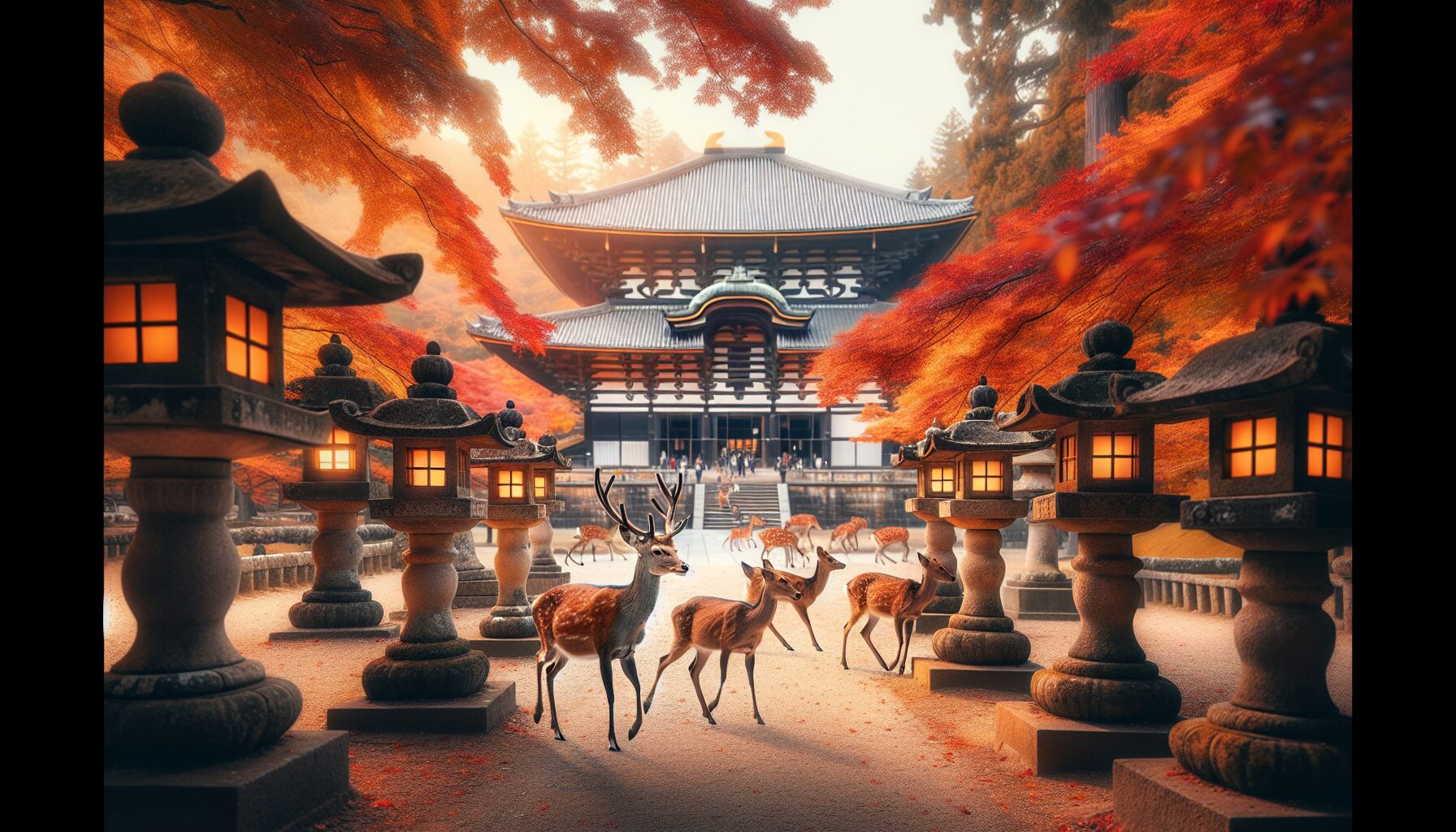

Just a short train ride from Osaka or Kyoto, Nara offers one of Japan’s most enchanting experiences—a city where over 1,200 sacred deer roam freely through ancient temples and peaceful parks. As Japan’s first permanent capital (710-794 AD), Nara combines incredible history with unique wildlife encounters that you simply won’t find anywhere else in the world.
This comprehensive day trip guide covers everything you need to know about visiting Nara in 2026, from feeding the famous deer to exploring magnificent temples, wandering through historic neighborhoods, and capturing perfect photos along the way.
Getting to Nara from Osaka and Kyoto
Reaching Nara is refreshingly simple, making it perfect for a day trip from either Osaka or Kyoto.
From Osaka (30-35 minutes)
- Kintetsu Nara Line: Direct from Osaka-Namba to Kintetsu-Nara Station (¥570/$3.80 as of 2026). This deposits you closest to Nara Park.
- JR Nara Line: From JR Osaka Station via Tennoji to JR Nara Station (¥800/$5.35). Covered by JR Pass but requires a 10-minute walk to the park.
- Recommendation: Take Kintetsu for convenience, or JR if you have a pass
From Kyoto (35-45 minutes)
- Kintetsu Kyoto Line: Direct from Kyoto Station to Kintetsu-Nara (¥640/$4.30)
- JR Nara Line: From Kyoto Station to JR Nara Station (¥720/$4.80)
- Express options: Limited Express trains save 10-15 minutes for an additional ¥520 ($3.50)
Nara Park: Meeting the Sacred Deer
Nara Park spans 1,240 acres and serves as home to over 1,200 free-roaming sika deer, considered sacred messengers of the Shinto gods. These aren’t zoo animals—they’re wild deer that have learned to coexist remarkably peacefully with humans over centuries.
Feeding the Deer Safely
The deer are surprisingly well-mannered, but follow these essential guidelines:
- Buy official deer crackers (shika senbei) from vendors for ¥200 ($1.35) per bundle—never feed human food
- Bow to the deer before offering crackers; many will bow back in an adorable ritual
- Keep crackers hidden until ready to feed, or you’ll be surrounded by eager deer
- Feed with an open palm and step back after giving treats
- Avoid feeding pregnant does (marked with yellow tags) during fawning season (May-July)
Best Photo Opportunities
- Early morning (8-9 AM): Softer light and fewer crowds
- Ukimido Pavilion: Traditional gazebo reflected in pond water
- Under cherry trees: Spectacular during sakura season (late March-early April)
- With Todai-ji in background: Classic Nara shot combining deer and architecture
Todai-ji Temple: Home of the Great Buddha
Todai-ji houses one of Japan’s most impressive sights—the Daibutsu, a massive bronze Buddha statue that has watched over Nara for over 1,250 years.
The Great Buddha Hall (Daibutsuden)
The current hall, rebuilt in 1709, remains the world’s largest wooden building despite being 30% smaller than the original. Inside, the 15-meter tall bronze Buddha statue weighs approximately 500 tons and represents Vairocana Buddha.
- Entry fee: ¥800 ($5.35) for adults, ¥400 ($2.70) for students
- Hours: 8:00 AM – 5:00 PM (April-October), 8:00 AM – 4:30 PM (November-March)
- Don’t miss: The pillar with a hole the same size as the Buddha’s nostril—crawling through supposedly guarantees enlightenment
Nigatsu-do Hall
A 15-minute uphill walk from the main hall leads to this secondary temple offering panoramic views over Nara. The wooden balcony provides exceptional sunset photography opportunities.
Kasuga Taisha: The Shrine of a Thousand Lanterns
This ancient Shinto shrine, established in 768 AD, features over 3,000 stone and bronze lanterns donated by worshippers throughout the centuries.
Main Shrine Complex
- Approach: Walk the atmospheric 2-kilometer path lined with stone lanterns
- Architecture: Brilliant vermillion buildings set against lush forest
- Special events: Lantern festivals in February and mid-August when all lanterns are lit simultaneously
- Entry: Outer areas free; inner shrine ¥500 ($3.35)
Kasuga Primeval Forest
Behind the shrine lies a sacred forest untouched for over 1,000 years. The forest walking trail takes 60-90 minutes and offers peaceful respite from crowds.
Naramachi: Historic Merchant District
South of Nara Park, this beautifully preserved neighborhood showcases traditional wooden machiya (merchant houses) from the Edo period.
Key Attractions
- Naramachi Museum: Free entry to restored merchant house showing traditional lifestyle
- Koshi-no-ie: Historic home open for public viewing (¥200/$1.35)
- Traditional craft shops: Local pottery, textiles, and Nara’s famous brushes
- Cafes and restaurants: Traditional sweets shops and modern fusion cuisine
Shopping and Dining
Look for kakinoha-zushi (persimmon leaf-wrapped sushi), Nara’s signature dish, and yamato-cha (local green tea). Many shops offer English explanations as of 2026, reflecting increased international tourism.
Isuien Garden: A Masterpiece of Japanese Landscaping
This exquisite garden, considered one of Japan’s finest, demonstrates the principle of “borrowed scenery” by incorporating distant temple rooflines and Wakakusa Hill into its design.
Garden Highlights
- Two distinct sections: Front garden (1670s) and rear garden (1899)
- Seasonal beauty: Plum blossoms (February), azaleas (May), autumn colors (November)
- Tea house: Traditional matcha service available for ¥800 ($5.35)
- Entry: ¥1,200 ($8.05) adults, includes museum access
- Hours: 9:00 AM – 4:30 PM, closed Tuesdays
Combining Nara with Kyoto
Many visitors successfully combine Nara with a Kyoto day trip, though this requires careful planning and early starts.
Recommended Itinerary
- 7:00 AM: Depart Kyoto for Nara
- 8:00-11:00 AM: Nara Park, deer feeding, and Todai-ji
- 11:00 AM-12:30 PM: Kasuga Taisha
- 12:30-2:00 PM: Lunch in Naramachi
- 2:00-3:30 PM: Quick Naramachi exploration
- 4:00 PM: Return to Kyoto for evening activities
Alternative: Two-Day Approach
For a more relaxed experience, consider splitting the trip: Nara as a full day from Osaka, then a separate Kyoto day. This allows time for Isuien Garden and deeper exploration of both cities.
Practical Tips for Your Nara Visit
Best Times to Visit
- Season: Spring (cherry blossoms) and autumn (fall colors) are peak but crowded
- Time of day: Early morning (before 9 AM) or late afternoon for fewer crowds
- Weather: Nara is pleasant year-round; bring layers in winter
What to Bring
- Comfortable walking shoes: Lots of ground to cover
- Hand sanitizer: For after deer interactions
- Cash: Many vendors still prefer cash in 2026
- Portable charger: For photo-heavy days
- Small backpack: Keep hands free for deer feeding
Cultural Etiquette
- Bow to deer as mentioned—it’s both polite and fun
- Don’t touch deer unnecessarily; they’re wild animals
- Remove shoes when entering temple buildings
- Photography: Avoid flash in temple interiors
Plan Your Japan Trip Today
Nara offers an unforgettable blend of wildlife encounters, spiritual experiences, and historical immersion that makes it an essential stop on any Japan itinerary. Whether you’re coming from Osaka, Kyoto, or making it a destination in itself, the city’s unique charm and accessibility make it perfect for travelers of all experience levels.
Start planning your Japanese adventure today—from booking flights to arranging accommodations near Nara Park, every detail contributes to creating memories that will last a lifetime. The sacred deer are waiting to bow to you, and the ancient temples stand ready to share their timeless wisdom.
📍 Part of our Japan Destinations Guide — browse all related Japan guides in one place.