
Tokyo Cherry Blossom 2026: Best Parks, Peak Dates & Hanami Tips
If you’re planning a trip to see the Tokyo cherry blossom parks in 2026, you’ve landed in exactly the right place. The sakura season is one of the most magical — and most fleeting — experiences Japan has to offer. Blink and you’ll miss it. We’re talking a window of roughly one to two weeks when the city transforms into a pink-and-white dreamscape, and late March through early April is your golden target. Whether this is your first hanami (flower-viewing) or you’re a returning sakura chaser, this guide has everything you need to plan a trip you’ll never forget.
Need help planning the rest of your trip? Check out our full cherry blossom season guide for everything from regional bloom timings to what to pack.
When Is Peak Bloom in Tokyo? (2026)
Tokyo’s cherry blossoms typically hit full bloom (mankai) somewhere between late March and the first week of April. Historically, peak bloom in the city has landed around 25 March–5 April, though this shifts year to year depending on winter temperatures. Warmer winters tend to push the bloom earlier; colder ones delay it slightly.
For 2026 specifically, official forecasts from organisations like the Japan Meteorological Corporation and Weathernews usually drop in late January or early February. Here’s how to stay on top of it:
- Japan Meteorological Corporation (JMC) — releases the most widely cited official sakura forecast each year.
- Weathernews Sakura Map — updates in near real-time as bloom progresses northward through Japan.
- NHK World — great English-language updates as the season unfolds.
- Google “Tokyo sakura forecast 2026” — bookmark results from late January onwards for the freshest numbers.
Pro tip: even if full bloom is a few days away, the kaika (opening) stage — when around 10–30% of blossoms are open — is genuinely beautiful and far less crowded. Don’t write off the days before peak.
Top 5 Cherry Blossom Parks in Tokyo
Tokyo has dozens of great sakura spots, but these five consistently deliver the best combination of atmosphere, accessibility, and sheer wow-factor. Here’s what makes each one worth your time.
1. Ueno Park
Ueno Park is Tokyo’s most iconic hanami destination, and for good reason — its long central promenade is lined with around 1,200 cherry trees, creating a tunnel of blossoms that’s genuinely breathtaking. The atmosphere here is lively, loud, and wonderfully festive, with food stalls, picnickers, and a carnival-like buzz that makes it feel like a celebration. Access is a breeze: it’s a two-minute walk from Ueno Station on the JR Yamanote Line, the Tokyo Metro Ginza Line, and the Hibiya Line.
2. Shinjuku Gyoen National Garden
If Ueno is the party, Shinjuku Gyoen is the sophisticated cousin — a manicured national garden that offers a calmer, more refined hanami experience with over 1,000 trees across several varieties, meaning the bloom can stretch over a longer window. It’s one of the few major Tokyo parks where alcohol is banned, which keeps the vibe relaxed and family-friendly. Entry costs ¥500 per adult and it’s easily reached from Shinjuku Gyoenmae Station on the Marunouchi Line.
3. Yoyogi Park
Yoyogi Park sits right next to Harajuku and has a laid-back, community festival feel — think drum circles, buskers, and big groups of friends spreading out on blue tarps under swaying pink canopies. It’s less regimented than Shinjuku Gyoen, alcohol is permitted, and it’s wonderfully easy to spend a whole afternoon just drifting between blankets and food trucks. Get there via Harajuku Station on the Yamanote Line or Yoyogi-Koen Station on the Chiyoda Line.
4. Meguro River
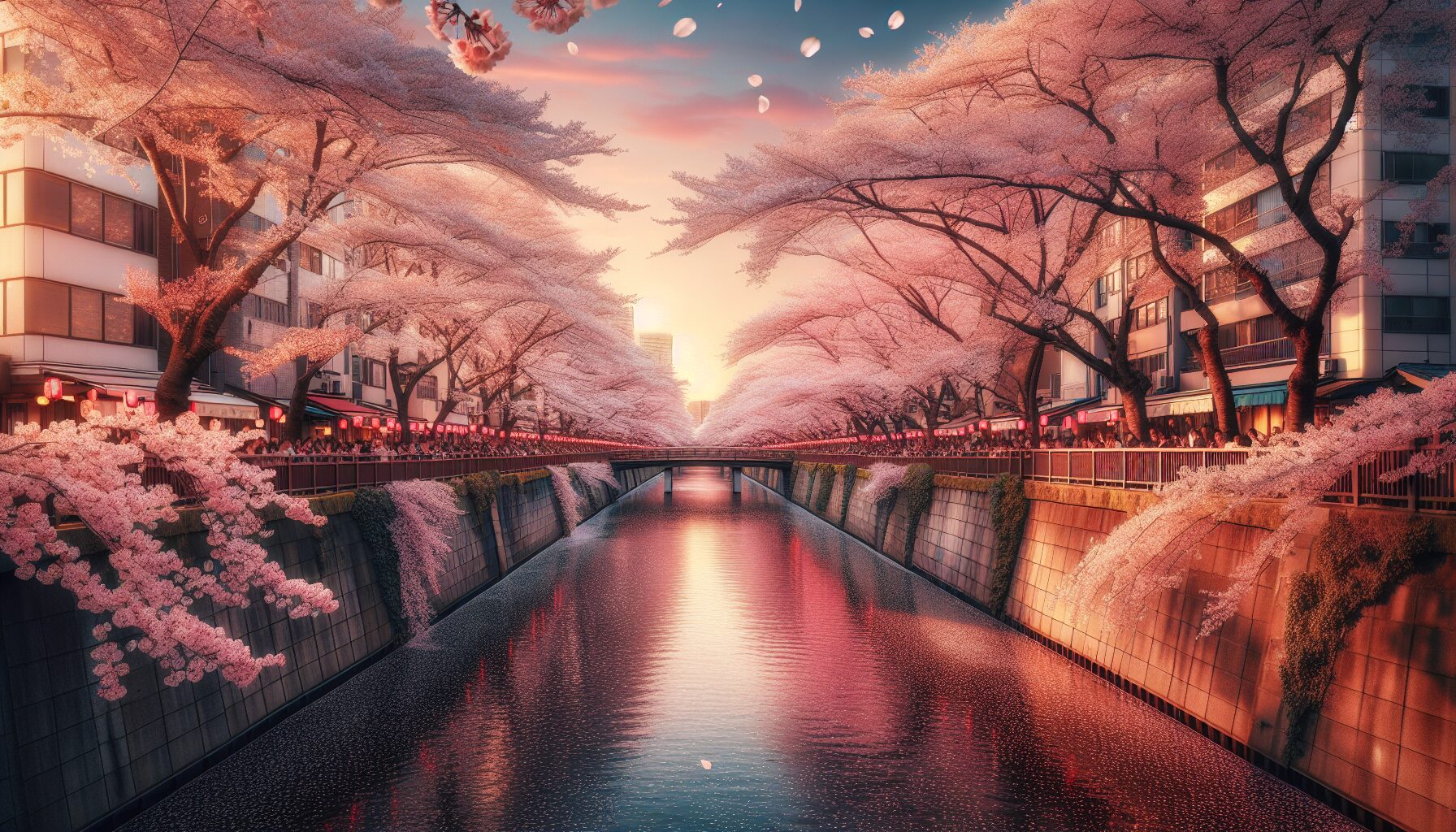
The Meguro River sakura walk is unlike any of the park experiences — here you stroll along a canal lined with around 800 cherry trees whose branches arc overhead and dip toward the water, creating one of Tokyo’s most photographed corridors. It runs roughly 3.8 kilometres through the trendy Nakameguro and Meguro neighbourhoods, with boutique coffee shops and stylish restaurants right along the bank. Come after dark for the illuminated nighttime sakura (yozakura) — it’s absolutely stunning and something every visitor should experience at least once.
5. Chidorigafuchi
Chidorigafuchi, a moat surrounding the Imperial Palace, is where you come for the quintessential postcard shot: pastel blossoms cascading over the water with rowboats drifting underneath them. The walking path along the moat is especially beautiful and relatively compact, making it easy to combine with a visit to Yasukuni Shrine or Kitanomaru Park nearby. Reach it from Kudanshita Station on the Tozai, Hanzomon, or Shinjuku Lines — rowboat rentals usually open during peak season, so factor in queue time if you want one.
Hanami Tips: What to Know Before You Go
Seeing the sakura is one thing; having a genuinely great hanami experience is another. Here are the practical things that make the difference.
Best Time of Day
Early mornings (before 9 am) are the holy grail — soft light, far fewer people, and a calm that makes the whole experience feel personal and special. Weekdays are significantly quieter than weekends throughout the season. If mornings don’t work for you, late afternoons into evening are the next best option, especially at spots like Meguro River where the nighttime illuminations genuinely rival the daytime scenery.
Picnic Rules and Etiquette
Most parks allow picnics and alcohol — with the notable exception of Shinjuku Gyoen. In parks like Ueno and Yoyogi, it’s perfectly normal (and expected) to lay out a tarp, crack open some canned chu-hi, and settle in for hours. Arrive early if you want a good spot, especially on weekends — in popular parks, some groups send a scout to hold space from the morning. Always take your rubbish with you; public bins are scarce and leaving waste behind is seriously frowned upon.
Managing the Crowds
Peak weekend days at Ueno or Chidorigafuchi can feel genuinely overwhelming — slow shuffling crowds, queues for everything, and barely enough room to stop for a photo. If you’re crowd-averse, prioritise weekday visits, arrive before 9 am, or choose slightly less famous spots like Koenji or Senzoku Ike Park where the locals go. Also keep an eye on the weather — a clear day after rain can bring a magical “sakura snowfall” of falling petals, but it also brings everyone else out at once.
Where to Stay Near Tokyo’s Best Sakura Spots
Location matters enormously during cherry blossom season. Staying close to your favourite sakura spots means you can be at the park gates right as they open — before the crowds arrive — and duck back out again before the midday rush hits. The Ueno and Shinjuku areas are two of the best bases for sakura season; both are central, well-connected on the train network, and surrounded by multiple bloom spots within easy reach.
Not sure which neighbourhood suits you best? Our guide on where to stay in Tokyo breaks down every major area for first-timers, with honest pros and cons for each.
One important heads-up: hotels in Tokyo during cherry blossom season book out fast — often months in advance. If you haven’t sorted accommodation yet, do it now.
Frequently Asked Questions
When is peak cherry blossom in Tokyo in 2026?
Based on historical averages, Tokyo’s cherry blossoms are expected to reach full bloom (mankai) between approximately 25 March and 5 April 2026. The exact dates depend on winter temperature patterns and will be confirmed by official forecasters in late January or February 2026. The blooms typically last around one to two weeks before petals begin to fall.
Which is the best cherry blossom park in Tokyo?
The “best” park depends on what kind of experience you want. Ueno Park is the most festive and lively. Shinjuku Gyoen is the most beautiful and peaceful. Meguro River offers the best nighttime sakura walk. Chidorigafuchi gives you the most iconic waterside scenery. Most visitors try two or three spots across their stay.
Is cherry blossom season a good time to visit Tokyo?
Absolutely — it’s one of the most spectacular times to visit Japan. The city is alive with energy, the scenery is stunning, and the cultural experience of hanami is something truly unique. The trade-off is that it’s also one of the busiest and most expensive periods of the year, so early booking for flights and hotels is essential.
How long does cherry blossom last in Tokyo?
Once Tokyo’s cherry blossoms reach full bloom, they typically last around one to two weeks before wind and rain cause the petals to fall. The falling petals — called hanafubuki (flower blizzard) — are beautiful in their own right, so even the tail end of the season has its magic. If you can stay for at least five to seven days around peak time, you’re well positioned to catch the best of it.
Final Thoughts: Go, and Go Early
There’s a reason millions of people plan their entire year around Japan’s cherry blossom season — it genuinely lives up to the hype, and then some. Tokyo’s parks during hanami have an atmosphere that’s hard to describe until you’ve sat under a canopy of pink blossoms with a warm drink, surrounded by the quiet murmur of people doing exactly the same thing. It feels ancient and modern all at once.
Plan early, book your hotel now, and give yourself enough days to visit more than one spot. If you need a full roadmap for the season across Japan, our cherry blossom season guide has you covered from Kyushu to Hokkaido.
Now go and book that trip — the sakura won’t wait for anyone.
📍 Part of our Tokyo Travel Guide — browse all related Japan guides in one place.