
{
“@context”: “https://schema.org”,
“@type”: “FAQPage”,
“mainEntity”: [
{
“@type”: “Question”,
“name”: “Is $5,000 AUD enough for a 10-day Japan trip from Australia?”,
“acceptedAnswer”: {
“@type”: “Answer”,
“text”: “$5,000 AUD covers a comfortable 10-day Japan trip including flights ($800-1,400), mid-range accommodation ($100-180/night), good meals, and attractions. You’ll have flexibility for splurge experiences like omakase dinners or ryokan stays.”
}
},
{
“@type”: “Question”,
“name”: “What’s the cheapest way to do a Japan trip from Australia?”,
“acceptedAnswer”: {
“@type”: “Answer”,
“text”: “Budget around $2,500 AUD for 7 days: book flights 3+ months ahead ($800-1,000), stay in hostels ($30-50/night), eat at convenience stores and ramen shops ($25-35/day), use IC cards for transport, and visit free temples and parks.”
}
},
{
“@type”: “Question”,
“name”: “How much should I budget for food per day in Japan?”,
“acceptedAnswer”: {
“@type”: “Answer”,
“text”: “Budget $40-80 AUD daily depending on your dining style: convenience store meals ($5-8), casual lunch ($10-15), and dinner ranging from ramen ($12) to omakase ($60-120). One specialty dinner per trip is worth the splurge.”
}
},
{
“@type”: “Question”,
“name”: “Are hotels expensive in Japan compared to Australia?”,
“acceptedAnswer”: {
“@type”: “Answer”,
“text”: “Tokyo business hotels ($100-180/night) offer better value than equivalent Sydney hotels, with superior service and location. Budget capsule hotels ($30-50) provide clean, safe accommodation in prime areas at backpacker prices.”
}
},
{
“@type”: “Question”,
“name”: “Should I get travel insurance for Japan?”,
“acceptedAnswer”: {
“@type”: “Answer”,
“text”: “Yes, travel insurance is essential for Japan. Medical costs are high for foreigners, and coverage protects against flight cancellations, lost luggage, and emergency evacuation. Budget $50-150 AUD for comprehensive coverage.”
}
},
{
“@type”: “Question”,
“name”: “How much cash should I bring to Japan from Australia?”,
“acceptedAnswer”: {
“@type”: “Answer”,
“text”: “Bring $300-500 AUD worth of yen cash for your first few days. While cashless payments expanded significantly by 2026, many restaurants, temples, and local businesses still prefer cash. ATMs at 7-Eleven accept international cards.”
}
},
{
“@type”: “Question”,
“name”: “Is the JR Pass worth buying from Australia?”,
“acceptedAnswer”: {
“@type”: “Answer”,
“text”: “The JR Pass pays off if you’re travelling between multiple cities (Tokyo-Kyoto-Osaka costs $300+ in individual tickets). For Tokyo-only trips, use IC cards instead. Calculate your specific routes before purchasing the $400-700 pass.”
}
}
]
}
{
“@context”: “https://schema.org”,
“@type”: “TravelAction”,
“name”: “Travel to Japan — Planning Your Japan Trip Budget: What to Expect”,
“description”: “A comfortable 7-day Japan trip costs $3,500-5,500 AUD from Australia, with accommodation and dining as biggest variables. Here’s exactly what to budget for each experience level.”,
“toLocation”: {
“@type”: “Country”,
“name”: “Japan”
}
}
Wondering exactly how much a Japan trip costs from Australia in 2026? A comfortable 7-day Japan trip runs $3,500–5,500 AUD all-inclusive, with accommodation and dining choices as your biggest variables. The beauty of Japan travel is that you get exceptional experiences at every budget level—from $5 convenience store breakfasts that are genuinely delicious to $300 ryokan stays that create lifelong memories.
This guide breaks down real costs by experience level, so you can plan a trip that matches both your budget and travel style. Whether you’re a backpacker seeking adventure or looking for luxury cultural immersion, here’s exactly what to expect in 2026.
Flight Costs: Sydney to Tokyo in 2026
Your biggest single expense is getting there, but flight prices have stabilized after the post-pandemic fluctuations of 2023-2024.
Flight Price Breakdown
- Budget airlines (Scoot, AirAsia X): $800–1,100 AUD return with basic service
- Full-service carriers (JAL, ANA, Qantas): $1,200–1,400 AUD return with meals and entertainment
- Premium economy: $1,800–2,400 AUD for extra legroom and priority boarding
Book 2-3 months ahead for the best deals. Flying Tuesday-Thursday typically saves $100-200 compared to weekend departures. Haneda Airport offers faster city access than Narita, but both are well-connected.
Seasonal Flight Pricing
Cherry blossom season (March-April) and autumn foliage (November) command premium prices. Consider visiting in late spring (May) or early winter (December-January) for lower fares and fewer crowds—experiences that many travellers find equally rewarding.
Accommodation: Matching Budget to Experience
Japan’s accommodation ranges from ultra-budget to luxury, each offering distinct cultural experiences that justify their price points.
Budget: Capsule Hotels and Hostels ($30–50 AUD/night)
Don’t mistake budget for basic—Japan’s hostels and capsule hotels are exceptionally clean and located in prime areas.
- Capsule hotels: Individual pods with privacy screens, shared bathrooms, often include sauna
- Modern hostels: Social atmosphere, private rooms available, kitchen facilities
- Location advantage: Often in Shibuya, Shinjuku, or Asakusa—areas where hotel rooms cost $200+ elsewhere
Perfect for solo travellers or those prioritizing location over space. You’ll spend most time exploring anyway.
Mid-Range: Business Hotels ($100–180 AUD/night)
This is the sweet spot for most travellers—exceptional value that often exceeds 4-star international standards.
- What you get: Compact but perfectly designed rooms, excellent locations, often near train stations
- Notable chains: APA Hotels, Dormy Inn (with onsen baths), Hotel Villa Fontaine
- Why it works: Superior service, daily housekeeping, and prime locations for the price of budget hotels elsewhere
For first-time visitors, this category offers the best balance of comfort and cultural immersion. Consider staying in different neighbourhoods—each Tokyo area offers unique experiences.
Luxury: Ryokan and Premium Hotels ($250–450 AUD/night)
Splurge on at least one night for the complete cultural experience.
- Traditional ryokan: Tatami rooms, kaiseki dinner, private or shared onsen, breakfast included
- Modern luxury: Park Hyatt Tokyo, Aman Tokyo for international standards with Japanese hospitality
- When to book: Hakone or Kyoto ryokan for the full traditional experience
A ryokan stay isn’t just accommodation—it’s cultural education. The kaiseki dinner alone justifies the premium, showcasing seasonal ingredients and centuries-old presentation techniques.
Food Budget: From Convenience Stores to Omakase
Japan’s food scene rewards every budget level with authentic, high-quality experiences.
Daily Food Budget by Style
Budget Eating ($25–35 AUD/day):
- Convenience store breakfast: $5–8 (rice balls, coffee, seasonal specials)
- Ramen or soba lunch: $10–15
- Convenience store or chain restaurant dinner: $12–18
Comfortable Dining ($50–80 AUD/day):
- Café breakfast: $12–18
- Restaurant lunch set: $15–25
- Izakaya or specialty dinner: $25–40
Foodie Experience ($80–150 AUD/day):
- Hotel or quality café breakfast: $20–30
- Specialty lunch (sushi, tempura): $25–45
- Omakase or fine dining: $60–120
Must-Try Food Experiences
Budget for at least one special meal—whether it’s $80 omakase sushi or a $60 kaiseki dinner. These aren’t tourist traps but cultural institutions where you’ll understand why Japanese cuisine earned its global reputation.
Convenience store food deserves mention as a legitimate dining option, not just emergency sustenance. Seasonal items like autumn sweet potato desserts or spring sakura-flavored treats are part of the cultural experience.
Transportation: IC Cards vs JR Pass Strategy
Japan’s transport efficiency justifies its costs, but choose the right option for your itinerary.
Within Cities: IC Card System
- Daily cost: $8–15 AUD for unlimited city travel
- Coverage: All trains, subways, buses, even some taxis and convenience stores
- 2026 update: Cashless payments now accepted on most systems
Between Cities: JR Pass Calculation
The JR Pass costs $400–700 AUD depending on duration, but only pays off for specific itineraries:
- Tokyo-Kyoto-Osaka round trip: $300+ in individual tickets—JR Pass worth it
- Tokyo-only trip: Stick with IC cards
- Extended travel: 14-21 day passes offer better value for longer trips
For detailed calculations, check our JR Pass vs IC Card comparison.
Attractions and Activities: Free vs Paid Experiences
Free Cultural Experiences
- Temples and shrines: Most are free or under $5 entry
- Parks and gardens: Cherry blossom viewing, autumn colors
- Neighborhood exploration: Harajuku, Shibuya, traditional districts
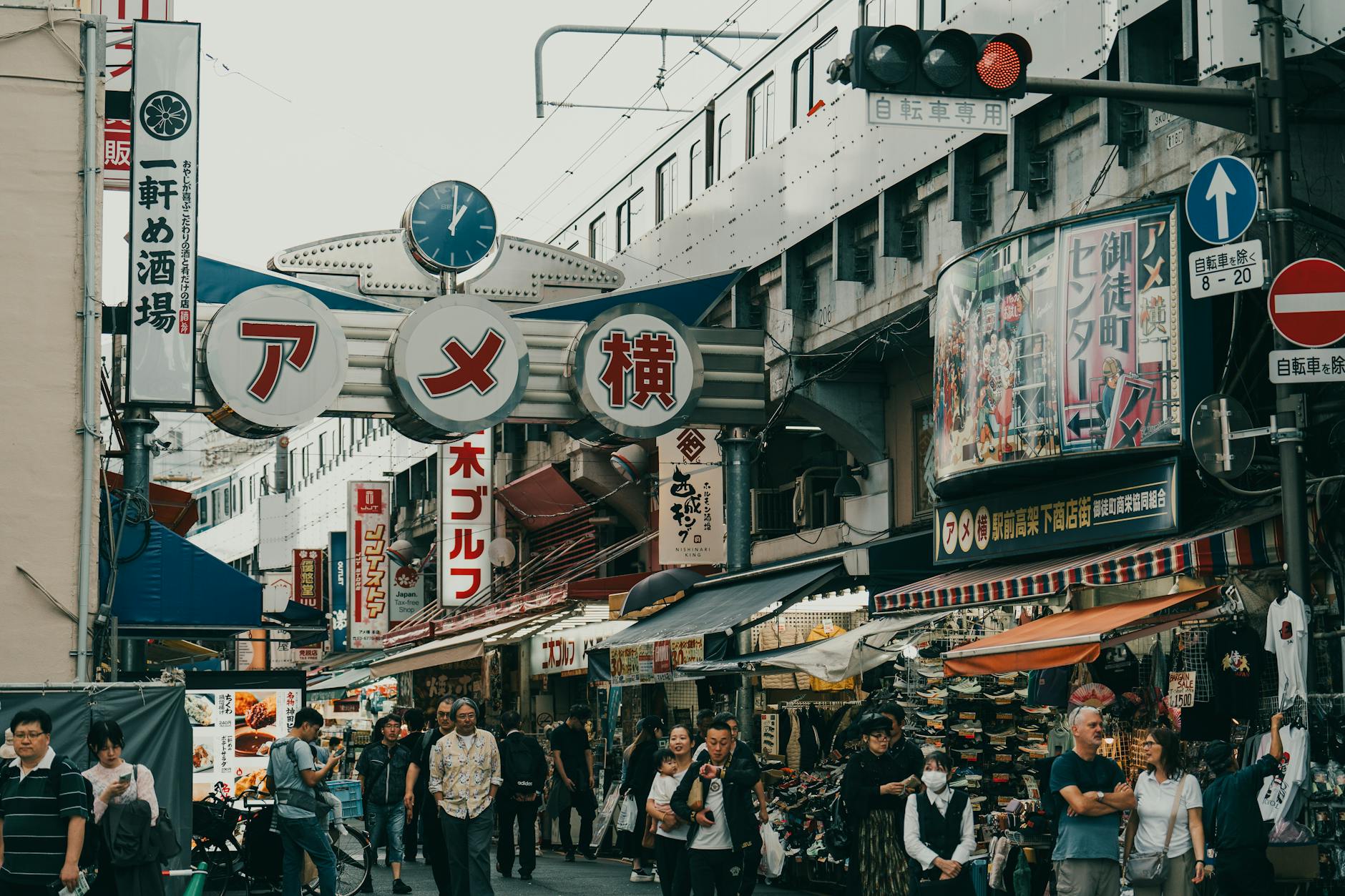
- Markets: Tsukiji Outer Market, Ameyoko in Ueno
Paid Attractions Worth the Cost
- teamLab Borderless/Planets: $30–40 AUD for digital art immersion
- Tokyo Disneyland/DisneySea: $65 AUD (¥9,400) for world-class theme parks
- Specialty museums: $15–25 for focused collections (Studio Ghibli, Tokyo National Museum)
Balance free cultural sites with 2-3 paid attractions that match your interests. Many temples offer profound experiences at no cost, while paid attractions provide unique entertainment unavailable elsewhere.
Sample 7-Day Budget Breakdowns by Travel Style
Budget Backpacker: $2,800 AUD Total
- Flights: $900
- Accommodation (hostels): $210 (7 nights × $30)
- Food: $210 (convenience stores, ramen shops)
- Transport: $70 (IC cards only)
- Attractions: $100
- Miscellaneous: $310
Comfortable Mid-Range: $4,200 AUD Total
- Flights: $1,200
- Accommodation (business hotels): $840 (7 nights × $120)
- Food: $420 (mix of casual and specialty dining)
- Transport: $150 (IC cards plus some express trains)
- Attractions: $200
- Shopping/souvenirs: $390
Luxury Cultural Immersion: $6,500 AUD Total
- Flights: $1,400 (premium economy)
- Accommodation: $2,100 (mix of luxury hotel and ryokan)
- Food: $700 (including omakase and kaiseki experiences)
- Transport: $400 (JR Pass plus premium options)
- Attractions: $300
- Cultural experiences: $600
Want a personalised estimate for your specific trip? Try our free Japan Budget Calculator—choose your travel style and duration to get a breakdown in seconds.
Money-Saving Tips That Don’t Compromise Experience
Timing Strategies
- Shoulder seasons: May and early December offer great weather with lower prices
- Weekday travel: Business hotels drop rates Sunday-Thursday
- Lunch specials: High-end restaurants offer lunch sets at 50% of dinner prices
Smart Spending Choices
- Convenience store meals: Embrace them as cultural experiences, not compromises
- Free walking tours: Many cities offer excellent volunteer-led tours
- Department store food courts: Quality meals at reasonable prices in premium locations
Avoid common first-timer mistakes that waste money—like buying unnecessary travel insurance add-ons or overpacking paid attractions when free alternatives offer equal cultural value.
Regional Budget Variations
Tokyo sets the price baseline, but other destinations offer different value propositions:
Osaka and Kyoto
- Accommodation: 10-15% cheaper than Tokyo
- Food: Osaka’s street food culture offers incredible value
- Transport: More walkable, lower daily transit costs
Regional Cities
Consider exploring beyond the golden route. Places like Fukuoka or Kanazawa offer authentic experiences at significantly lower costs—accommodation runs $60-120/night for quality options, and dining costs drop 20-30%.
For comprehensive regional guidance, explore our comparison of Japan’s main travel bases.
Additional Costs to Consider
Essential Add-Ons
- Travel insurance: $50–150 AUD (essential for medical coverage)
- Connectivity: eSIM or pocket Wi-Fi $30–80 for your stay
- Visa fees: None for Australian passport holders (90-day visa-free entry)
Optional Upgrades
- Airport transfers: Express trains $25-35 vs regular trains $10-15
- Luggage forwarding: $20-30 to send bags between cities
- Private tours: $200-500 for specialized experiences
Frequently Asked Questions
Is $5,000 AUD enough for a 10-day Japan trip from Australia?
$5,000 AUD covers a comfortable 10-day Japan trip including flights ($800-1,400), mid-range accommodation ($100-180/night), good meals, and attractions. You’ll have flexibility for splurge experiences like omakase dinners or ryokan stays.
What’s the cheapest way to do a Japan trip from Australia?
Budget around $2,500 AUD for 7 days: book flights 3+ months ahead ($800-1,000), stay in hostels ($30-50/night), eat at convenience stores and ramen shops ($25-35/day), use IC cards for transport, and visit free temples and parks.
How much should I budget for food per day in Japan?
Budget $40-80 AUD daily depending on your dining style: convenience store meals ($5-8), casual lunch ($10-15), and dinner ranging from ramen ($12) to omakase ($60-120). One specialty dinner per trip is worth the splurge.
Are hotels expensive in Japan compared to Australia?
Tokyo business hotels ($100-180/night) offer better value than equivalent Sydney hotels, with superior service and location. Budget capsule hotels ($30-50) provide clean, safe accommodation in prime areas at backpacker prices.
Should I get travel insurance for Japan?
Yes, travel insurance is essential for Japan. Medical costs are high for foreigners, and coverage protects against flight cancellations, lost luggage, and emergency evacuation. Budget $50-150 AUD for comprehensive coverage.
How much cash should I bring to Japan from Australia?
Bring $300-500 AUD worth of yen cash for your first few days. While cashless payments expanded significantly by 2026, many restaurants, temples, and local businesses still prefer cash. ATMs at 7-Eleven accept international cards.
Is the JR Pass worth buying from Australia?
The JR Pass pays off if you’re travelling between multiple cities (Tokyo-Kyoto-Osaka costs $300+ in individual tickets). For Tokyo-only trips, use IC cards instead. Calculate your specific routes before purchasing the $400-700 pass.
Plan Your Japan Trip Today
Now you have realistic budget expectations for every aspect of Japan travel. The key is matching your spending to experiences that matter most to you—whether that’s splurging on an unforgettable ryokan stay or maximizing your time with efficient business hotel locations.
Ready to book? Start with flights and accommodation, as these lock in your biggest expenses. For accommodation recommendations by area and travel style, explore our detailed Tokyo neighbourhoods guide. Your Japan adventure awaits, and with proper budgeting, it’ll exceed every expectation.