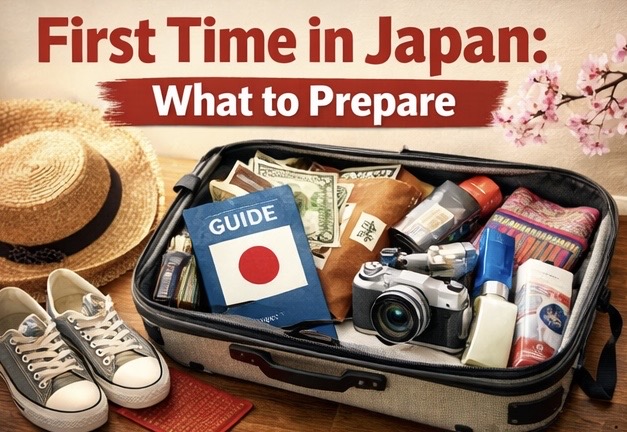

Planning your first trip to Japan can feel exciting, but also a little overwhelming. From transportation and internet access to payment methods and hotel areas, there are a few things worth preparing in advance to make your trip much smoother.
This guide covers the essentials for first-time visitors to Japan, including what to book, what to pack, and what to know before you arrive.
1. Make sure your passport and entry requirements are ready
Before anything else, check that your passport is valid for your trip and review the latest entry requirements for Japan based on your nationality.
Depending on where you are traveling from, you may need to prepare visa-related documents or confirm how long you are allowed to stay.
It is also a good idea to keep digital and printed copies of important documents such as:
- your passport
- flight confirmation
- hotel reservations
- travel insurance details
- emergency contact information
Having these ready can save time and reduce stress during your trip.
2. Decide how you will stay connected
Internet access is one of the most important things to arrange before arriving in Japan.
Many travelers choose one of these options:
- eSIM
- physical SIM card
- pocket Wi-Fi
For most short-term travelers, an eSIM is often the easiest option if your phone supports it. It can usually be activated quickly and removes the need to pick up or carry an extra device.
A physical SIM card can also work well if your device does not support eSIM.
A pocket Wi-Fi may be useful for families or groups traveling together with multiple devices.
Choose the option that best fits your phone, travel style, and length of stay.
3. Plan how you will pay
Japan has become much more convenient for cashless payments, but it is still smart to prepare for both card and cash use.
In major cities, many places accept:
- credit cards
- debit cards
- IC cards
- mobile payments
However, smaller restaurants, local shops, temples, countryside areas, and some ticket machines may still prefer cash.
For a smoother trip, it is best to:
- bring a credit card that works internationally
- carry some Japanese yen
- use ATMs at convenience stores when needed
A balanced approach is the safest option, especially for first-time visitors.
4. Choose the right area to stay
Where you stay can make a big difference in how easy your trip feels.
When booking accommodation, do not only look at price. Also consider:
- access to major train lines
- distance from stations
- airport transfer convenience
- neighborhood atmosphere
- nearby shops and restaurants
For example, in Tokyo, areas like Shinjuku, Ueno, Tokyo Station, and Asakusa are often popular with first-time visitors for different reasons.
In Kyoto, staying near Kyoto Station, Gion, or central transport areas can make sightseeing easier.
In Osaka, many travelers prefer areas such as Namba, Umeda, or Shinsaibashi.
Choosing a convenient area can save time and make your itinerary much more comfortable.
5. Learn the basics of transportation
Japan’s transport system is excellent, but it can feel confusing at first if you are not prepared.
Before your trip, it helps to understand the basics of:
- trains and subway lines
- airport access
- IC cards
- long-distance travel such as the Shinkansen
For city travel, many visitors use an IC card to ride trains, subways, and buses more easily.
If you plan to visit multiple cities, it is worth looking into whether a rail pass or individual tickets make more sense for your route.
Even learning a few basics before arriving can make a huge difference on your first day in Japan.
6. Book important things in advance
Japan can be very popular during peak travel seasons, so booking key parts of your trip early is a smart move.
You may want to reserve these in advance:
- hotels
- airport transfers
- popular tours
- theme park tickets
- special restaurant experiences
- certain train-related services
- pocket Wi-Fi or SIM pickup if needed
This is especially important during:
- cherry blossom season
- Golden Week
- summer holidays
- autumn foliage season
- New Year holiday periods
Leaving everything until the last minute can limit your options.
7. Prepare for the season
Japan has four distinct seasons, and weather conditions can vary a lot depending on the time of year and the region you visit.
Make sure to check the expected weather and pack accordingly.
A few examples:
- Spring: light layers and allergy support if needed
- Summer: breathable clothing, sun protection, and hydration
- Autumn: layers for changing temperatures
- Winter: warm outerwear, especially in northern areas
Comfortable walking shoes are essential in every season, since many travelers end up walking much more than expected.
8. Bring the essentials for daily travel
A few small items can make your trip much easier.
Useful things to prepare include:
- a portable charger
- comfortable shoes
- a travel adapter if needed
- a small bag for day trips
- basic medicine
- tissues or wipes
- a refillable water bottle
Japan is very convenient, but having your essentials ready helps reduce small problems during long sightseeing days.
9. Learn a few simple travel habits in Japan
Japan is generally very easy and safe to travel in, but knowing some basic etiquette can help you feel more comfortable.
A few useful points:
- line up in an orderly way
- keep noise low on trains
- carry your trash until you find a bin
- be respectful in temples, shrines, and quiet spaces
- follow local signs and station guidance
You do not need to be perfect, but a little awareness goes a long way.
10. Keep your itinerary realistic
One of the most common mistakes first-time visitors make is trying to do too much.
Japan offers so much to see that it is easy to overpack your schedule. But moving between neighborhoods, navigating stations, and spending long days sightseeing can take more energy than expected.
A better approach is to:
- focus on a few key areas each day
- leave room for breaks
- allow extra time for transport
- avoid changing hotels too often
A realistic itinerary often leads to a much better trip.
Final thoughts
Your first trip to Japan does not need to be complicated. With a little preparation, you can avoid common stress points and enjoy your time much more.
Start with the basics:
- sort out your documents
- decide how to stay connected
- prepare for payment and transport
- book key parts of your trip
- pack for the season
- keep your itinerary manageable
Good preparation makes it much easier to enjoy the food, culture, cities, and experiences that make Japan such a memorable destination.
📍 Part of our Japan Travel Planning Guide — browse all related Japan guides in one place.
Use our free JR Pass Calculator — enter your planned routes and get an instant verdict in seconds.