

Choosing where to stay in Kyoto is one of the most important decisions you’ll make before your first trip. Get it right and the city feels effortless — temples around every corner, easy trains when you need them, and beautiful evening walks back to your hotel. Get it wrong and you’ll spend too much time on buses, feel disconnected from the best parts of the city, or end up in a beautiful area that’s just not practical for getting around.
The best areas to stay in Kyoto for first-time visitors depend on what kind of trip you want. Some areas are better for sightseeing on foot, some are more practical for transport, and some offer traditional atmosphere that makes Kyoto feel like the destination you imagined before you arrived.
In this guide, we compare every major area worth considering, explain who each one suits best, and give you a clear framework for making the right choice.
If you’re also planning an itinerary, our Kyoto 2-Day Itinerary for First-Time Visitors pairs well with this guide.
1. What first-time visitors should look for in a Kyoto neighbourhood
Kyoto is smaller than Tokyo or Osaka but more spread out than it looks on a map. Many of the famous sights — Arashiyama, Fushimi Inari, Kinkaku-ji — are not close to each other, and the bus network, while extensive, can be slow during peak tourist hours.
Before choosing a hotel in Kyoto, focus on these factors:
- Easy access to buses or trains (Kyoto’s bus network connects most sights, but a hotel near the subway line saves time)
- Reasonable distance to the areas you actually want to visit
- Restaurants and convenience stores within a short walk — you’ll want these after long days of walking
- Practical arrival from Kyoto Station (most visitors arrive by Shinkansen from Tokyo or Osaka)
- An atmosphere that matches your travel style
In Kyoto, a slightly better location can save you 30–60 minutes of travel each day — and that adds up quickly over a 2 or 3-night stay. Kyoto hotels are generally more expensive than Osaka, so it’s worth choosing carefully rather than just picking the cheapest option.
Typical Kyoto hotel prices (per night, USD approximate):
- Budget guesthouses and hostels: $40–$80
- Business hotels: $80–$150
- Mid-range hotels: $150–$280
- Traditional machiya or ryokan: $200–$600+
For more on overall Japan trip costs, see our guide on How Much Does a Trip to Japan Cost?
2. Kyoto Station area: best for convenience and transport
The Kyoto Station area is the most practical base for first-time visitors and the easiest choice if you want to keep logistics simple.
Kyoto Station is one of the largest stations in Japan. It connects directly to the JR Shinkansen network, the Karasuma subway line, and extensive bus routes that fan out across the entire city. If you’re doing a multi-city Japan trip that includes Osaka or Nara as day trips, staying near Kyoto Station makes those trips almost effortless — Osaka is about 15 minutes by limited express, and Nara is under 45 minutes by JR.
The area around the station is not particularly scenic, but it has everything you need: department stores, the Isetan shopping complex inside the station building, dozens of restaurants, and a strong concentration of mid-range and business hotels.
Who it’s best for:
- Travelers visiting multiple cities (Tokyo → Kyoto → Osaka)
- Short stays of 1–2 nights where convenience is the priority
- Families with young children who need reliable transport and easy logistics
- Anyone arriving late and wanting a simple, stress-free check-in
Pros
- Excellent access to all train lines and Shinkansen
- Easy arrival and departure from anywhere in Japan
- Many hotel options at different price points
- Lots of shopping, restaurants, and convenience stores
- Nishihongan-ji and Toji temple are walkable from the station
Cons
- Little traditional atmosphere — feels more functional than scenic
- Evening walks around the station are not particularly memorable
- Further from Gion, Higashiyama, and the most scenic sightseeing areas
Search hotels near Kyoto Station on Booking.com
3. Gion: best for classic Kyoto atmosphere
Gion is the most iconic area in Kyoto and, for many first-time visitors, the place they imagined when they booked the trip. The narrow lanes of Hanamikoji-dori, the wooden machiya townhouses, the occasional sight of a geiko or maiko walking to an evening appointment — Gion delivers a Kyoto experience that few other areas can match.
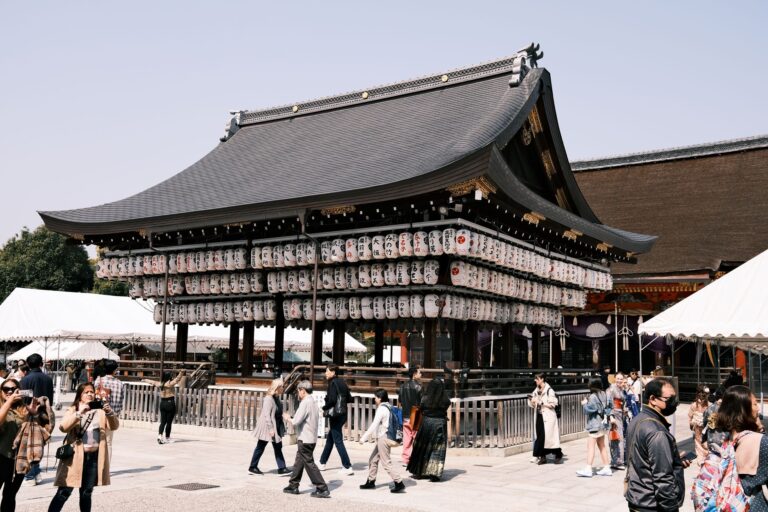
From Gion, you can walk to Yasaka Shrine in minutes, reach the Higashiyama sightseeing trail in under 10 minutes, and be at Kiyomizu-dera in about 20 minutes on foot. It’s an exceptional base if your priority is being close to Kyoto’s most famous traditional sights.
The nearest subway station is Gion-Shijo on the Keihan line, which connects to Fushimi Inari to the south and links easily to Osaka via Namba. Kyoto Station is about 15 minutes by bus or 20 minutes on foot along the Kamo River — pleasant enough that many visitors enjoy the walk.
Who it’s best for:
- First-time visitors who want the iconic Kyoto experience
- Couples and travelers who value atmosphere over pure convenience
- Anyone with 3+ nights who wants memorable evening walks
- Visitors planning to spend most of their time in eastern Kyoto
Pros
- Unmatched traditional atmosphere — the lanes look like old Japan
- Walking distance to Higashiyama, Yasaka Shrine, and Kiyomizu-dera
- Excellent restaurants and intimate bars in the area
- Memorable evening and early morning atmosphere (fewer crowds than daytime)
Cons
- Hotels are more expensive than the Kyoto Station area
- Very crowded in peak seasons (spring cherry blossom, autumn foliage)
- Getting to the northwest of the city (Kinkaku-ji, Arashiyama) requires more planning
Search hotels in Gion on Booking.com
4. Kawaramachi and Downtown Kyoto: best for balance
Kawaramachi and the surrounding downtown area sit between Gion to the east and the wider city centre, and they are consistently one of the best overall choices for first-time visitors who want a strong balance of everything.
The area around Kawaramachi Station (Hankyu line) and Shijo-dori is Kyoto’s most lively shopping and dining district. Nishiki Market — Kyoto’s famous covered food market — is a short walk from most hotels here, and the streets around Pontocho-dori offer excellent restaurants along the Kamo River. In the evenings, the riverside is one of the nicest places in Kyoto to walk.
Transport-wise, Kawaramachi gives you bus connections across the city and the Hankyu line to Osaka (Umeda) directly — useful if you’re combining Kyoto and Osaka. Kyoto Station is about 15–20 minutes by bus or taxi.
Who it’s best for:
- First-time visitors who want a lively, central base with restaurant options
- Travelers doing a mix of sightseeing and eating (Kyoto food culture is excellent)
- Anyone who wants to be close to Gion without paying Gion prices
- Visitors combining Kyoto and Osaka (Hankyu line is convenient)
Pros
- Central location with strong restaurant and cafe options
- Easy walking access to Gion and the Kamo River
- Good balance of atmosphere and daily convenience
- Generally slightly better value than Gion proper
Cons
- Some parts feel more commercial than traditional
- Busy in popular periods — book early for spring and autumn
- Getting to northwest sights (Arashiyama, Kinkaku-ji) still requires a bus or taxi
Search hotels in Kawaramachi and Downtown Kyoto on Booking.com
5. Higashiyama: best for scenic atmosphere and early access to sights
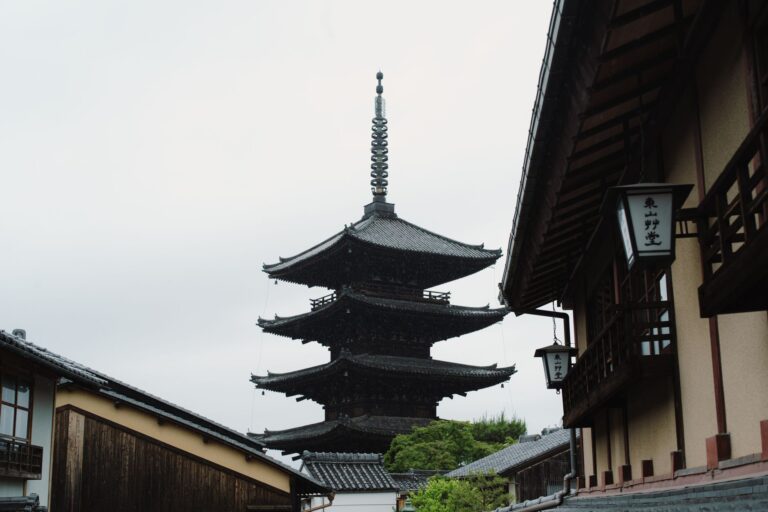
Staying in Higashiyama means you’re right next to some of Kyoto’s most beautiful streetscapes. The Sannenzaka and Ninenzaka stone-paved lanes, Kiyomizu-dera temple, Yasaka Shrine, and Maruyama Park are all within walking distance — some of them are literally at your doorstep.
The big advantage of staying here is being able to visit the famous lanes in the early morning, before the day-tripper crowds arrive. By 8 AM, Sannenzaka can be almost empty. By 10 AM, it’s packed. Staying nearby means you can be there at dawn without needing to plan an early train.
The area is quieter in terms of everyday amenities — fewer convenience stores, fewer transport options — but if your main goal is Kyoto’s traditional sightseeing, it’s hard to beat the location.
Who it’s best for:
- Visitors who want maximum time at Kyoto’s most famous traditional sights
- Photographers who want to shoot the lanes at golden hour
- Couples looking for a romantic, scenic base
- Travelers on a 2–3 night stay focused on eastern Kyoto
Pros
- Immediate access to Kiyomizu-dera, Sannenzaka, and Higashiyama trail
- Extremely beautiful traditional setting
- Excellent for early morning walks before crowds arrive
- Some of Kyoto’s finest small guesthouses and ryokan are here
Cons
- Less practical for wider city movement (no subway line, bus-dependent)
- Limited late-night dining compared to Kawaramachi or Gion
- Taxis from Kyoto Station can be expensive (around ¥1,500–¥2,000)
6. Arashiyama: best for a quieter, scenic stay
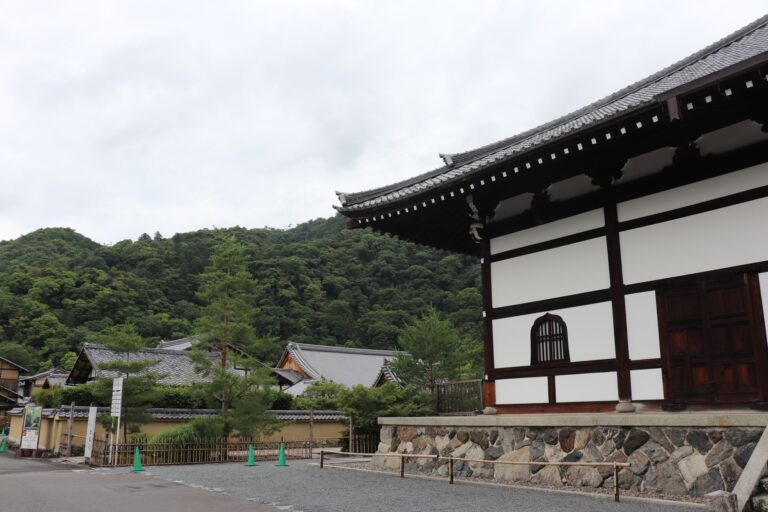
Arashiyama is in western Kyoto, about 30 minutes by train or taxi from Kyoto Station, and it’s a completely different pace from the rest of the city. The famous Bamboo Grove, Tenryu-ji temple and its garden, and the scenic Oi River make this one of the most photographed areas in all of Japan.
Staying here is not the most practical choice for covering a wide range of Kyoto sights — you’ll spend meaningful travel time getting to Gion or the eastern temples. But if you want a slower, more immersive Kyoto experience, or if you’ve already seen the main highlights and want to focus on nature and atmosphere, Arashiyama is genuinely special.
There’s also a growing selection of excellent ryokan and boutique hotels in this area — if you’re looking for the traditional ryokan experience with tatami rooms, yukata robes, and kaiseki dinner, Arashiyama is one of the best places in Kyoto to find it.
Pros
- Beautiful, peaceful atmosphere — very different from central Kyoto
- Excellent ryokan options for a traditional Japanese stay
- Bamboo Grove and Tenryu-ji are steps away
- Less crowded in the mornings and evenings
Cons
- Farther from central Kyoto sightseeing — every day trip costs you 30–60 minutes
- Limited transport options (Randen tram, JR Sagano line, buses)
- Not ideal if you want to explore the whole city efficiently
7. Kyoto Station vs Gion: which should you choose?
This is the most common question first-time visitors ask. Here’s the honest answer.
Choose Kyoto Station if you:
- Are visiting Kyoto for 1–2 nights as part of a longer Japan trip
- Need to take day trips to Osaka, Nara, or onward to Hiroshima
- Travel with heavy luggage and want simple logistics
- Are traveling with young children or elderly companions
- Want the widest range of hotels at the most competitive prices
Choose Gion if you:
- Have 3+ nights in Kyoto and want to soak in the atmosphere
- Want evening walks through historic lanes as part of your daily experience
- Are traveling as a couple or with someone who appreciates traditional Japan
- Don’t mind paying a bit more for the setting
Choose Downtown Kawaramachi if you: want the best of both — good transport, great food, and enough atmosphere without Gion prices.
8. Quick comparison: which area suits your trip?
| Area | Best For | Transport | Atmosphere |
|---|---|---|---|
| Kyoto Station | Multi-city trips, convenience | Excellent | Functional |
| Gion | Atmosphere, couples, 3+ nights | Good | Exceptional |
| Kawaramachi | Food, balance, first-timers | Good | Good |
| Higashiyama | Scenic access, photography | Moderate | Excellent |
| Arashiyama | Ryokan, slow travel, nature | Limited | Excellent |
9. Tips for booking a hotel in Kyoto
Kyoto is one of Japan’s most popular destinations and books out quickly — especially during cherry blossom season (late March to mid-April) and autumn foliage season (mid-November). For those periods, book 3–6 months in advance. For other times of year, 4–8 weeks in advance is generally sufficient.
Before booking, check:
- Distance to the nearest station or major bus route — Kyoto’s bus system is useful but slow; proximity to a subway station (Karasuma or Tozai line) speeds things up considerably
- Walking time to Kyoto Station — even if you’re not staying near it, knowing how long it takes helps you plan day trips
- Whether the area gets loud at night — Gion and Pontocho have vibrant evenings but some streets are quiet by 10 PM; Kawaramachi is livelier
- Room size — Japanese hotel rooms are often compact; check photos carefully if you have large luggage
- Cancellation policy — flexible bookings are worth it for Japan trips where plans can shift
For help navigating the train system once you arrive, our guide on How to Use Trains in Japan covers everything you need to know.
10. Final thoughts
The best area to stay in Kyoto for first-time visitors depends on what kind of trip you’re taking. If you want the easiest logistics and maximum flexibility for day trips, stay near Kyoto Station. If you want the most atmospheric and memorable Kyoto experience, Gion is hard to beat. If you want a strong overall balance of food, access, and atmosphere, Downtown Kawaramachi is consistently the safest and most flexible choice for first-timers.
Whatever you choose, the most important thing is matching your hotel area to your actual travel style — not just picking the most famous name. A well-chosen location can make your Kyoto trip significantly more enjoyable and much less tiring.
Planning to visit both Kyoto and Osaka? Read our guide on the Best Areas to Stay in Osaka for First-Time Visitors to choose your Osaka base with the same clarity.
Frequently Asked Questions
What is the best area to stay in Kyoto for first-time visitors?
For most first-time visitors, either Kawaramachi (Downtown Kyoto) or the Kyoto Station area is the best choice. Kawaramachi gives you a central location with great restaurants, easy access to Gion, and good transport links. Kyoto Station is the best pick if you’re doing a multi-city Japan trip and want maximum transport convenience. Gion is ideal if atmosphere is your top priority and you have 3+ nights.
Is it better to stay near Kyoto Station or in Gion?
It depends on your priorities. Kyoto Station is better for convenience, day trips, and easy arrival and departure — especially if you’re also visiting Osaka or Nara. Gion is better for atmosphere and being close to Kyoto’s most traditional sights. For most first-timers on a 2–3 night stay, Kyoto Station or Kawaramachi is the more practical and less expensive option.
How far is Gion from Kyoto Station?
Gion is about 2.5 km from Kyoto Station — roughly 30 minutes on foot along the Kamo River, or 15 minutes by bus. There’s no direct subway connection, but the walk along the river is pleasant. Many visitors use the bus (routes 17, 205) or take a taxi (around ¥1,200–¥1,500).
Is Arashiyama a good place to stay in Kyoto?
Arashiyama is a good base if you want a quieter, more scenic stay with access to some of Kyoto’s most beautiful natural scenery — the Bamboo Grove, Tenryu-ji, and the Oi River. It’s especially good for ryokan experiences. However, it’s farther from central Kyoto, and getting to Gion or the eastern temples requires 30–45 minutes of travel. For first-timers who want to cover a lot of ground, a more central area is usually more practical.
How much do hotels in Kyoto cost?
Kyoto hotels generally cost more than Osaka and less than central Tokyo. Budget guesthouses start around $40–$80 USD per night. Business hotels and mid-range options typically run $80–$200. Traditional ryokan (often including dinner and breakfast) start around $200–$300 per person and can go significantly higher. Prices spike sharply during cherry blossom and autumn foliage seasons, so booking early is essential.
Should I stay in Kyoto or Osaka and day-trip?
This is a popular approach and it works well. Staying in Osaka (which is generally cheaper and has better nightlife) and day-tripping to Kyoto by train takes about 15–30 minutes depending on the service you catch. The downside is that you miss Kyoto’s famous early morning atmosphere — the sights like Fushimi Inari and Sannenzaka are much quieter before 9 AM, which you can only really experience if you’re staying nearby.
Ready to book your Kyoto hotel?
Compare options across all the areas covered in this guide on Booking.com — search Kyoto hotels here. Filter by neighbourhood to find the area that fits your trip.
- Kyoto 2-Day Itinerary for First-Time Visitors
- How Much Does a Trip to Japan Cost?
- How to Use Trains in Japan
- Best Areas to Stay in Osaka for First-Time Visitors
- Where to Stay in Tokyo for First-Time Visitors
📍 Part of our Kyoto Travel Guide — browse all related Japan guides in one place.