

{
“@context”: “https://schema.org”,
“@type”: “FAQPage”,
“mainEntity”: [
{
“@type”: “Question”,
“name”: “How much does a 2-week trip to Japan cost from Australia in 2026?”,
“acceptedAnswer”: {
“@type”: “Answer”,
“text”: “A 2-week Japan trip from Australia typically costs AUD 4,500–6,500 per person on a mid-range budget, including return flights, accommodation, food, transport, and activities. Budget travelers can get by on AUD 3,500–4,500, while those wanting comfort and luxury should budget AUD 7,000–12,000+.”
}
},
{
“@type”: “Question”,
“name”: “How much are flights from Australia to Japan in 2026?”,
“acceptedAnswer”: {
“@type”: “Answer”,
“text”: “Return flights from Sydney or Melbourne to Tokyo (Narita or Haneda) typically cost AUD 1,100–1,800 in economy class if booked 2–4 months ahead. Flights from Brisbane run AUD 1,200–1,900, while Perth to Tokyo is often pricier at AUD 1,400–2,200 due to fewer direct route options. Flying into Osaka (Kansai) can sometimes be cheaper.”
}
},
{
“@type”: “Question”,
“name”: “Is Japan expensive for Australians in 2026?”,
“acceptedAnswer”: {
“@type”: “Answer”,
“text”: “Japan is considered moderately priced for Australians. While the yen has strengthened slightly from its 2024 lows, the AUD still offers good purchasing power. Daily costs in Japan (excluding flights) typically run AUD 120–200 per person per day on a mid-range budget, which is comparable to or cheaper than traveling domestically in Australia.”
}
},
{
“@type”: “Question”,
“name”: “How much does a family of 4 trip to Japan cost from Australia?”,
“acceptedAnswer”: {
“@type”: “Answer”,
“text”: “A family of 4 (2 adults, 2 children under 12) should budget AUD 18,000–26,000 for 2 weeks all-in. Children often receive 50% discounts on JR trains, free or half-price entry to many attractions, and cheaper meal options. Accommodation in family rooms at business hotels typically costs AUD 200–320 per night.”
}
},
{
“@type”: “Question”,
“name”: “Is the JR Pass worth buying for Australians visiting Japan in 2026?”,
“acceptedAnswer”: {
“@type”: “Answer”,
“text”: “The 21-day JR Pass costs approximately AUD 780–820 in 2026. It’s worth it if you travel between multiple cities — for example, the Tokyo–Kyoto–Hiroshima–Osaka route alone covers most of that cost. If you’re staying in one or two cities, an IC card is usually the better value option.”
}
},
{
“@type”: “Question”,
“name”: “What is the cheapest time of year for Australians to visit Japan?”,
“acceptedAnswer”: {
“@type”: “Answer”,
“text”: “The cheapest months to visit Japan are January–February (excluding New Year), June (rainy season), and September. Flights and hotels are noticeably cheaper during these periods. Avoid cherry blossom season (late March–April), Golden Week (late April–early May), and autumn foliage season (November) if budget is a priority.”
}
},
{
“@type”: “Question”,
“name”: “Do I need a visa for Japan as an Australian in 2026?”,
“acceptedAnswer”: {
“@type”: “Answer”,
“text”: “No. Australian passport holders can enter Japan visa-free for up to 90 days as of 2026. You do not need to apply for a visa in advance. Simply ensure your passport is valid for the duration of your stay and complete Japan’s Visit Japan Web pre-registration for faster immigration clearance.”
}
}
]
}
{
“@context”: “https://schema.org”,
“@type”: “TravelAction”,
“name”: “Travel to Japan — SEO Strengthen: how much does a trip to japan cost from australia 2026 budget guide”,
“description”: “A 2-week Japan trip from Australia costs roughly AUD 4,500–9,000 per person all-in. Here’s the exact 2026 breakdown by budget level, city, and family size.”,
“toLocation”: {
“@type”: “Country”,
“name”: “Japan”
}
}
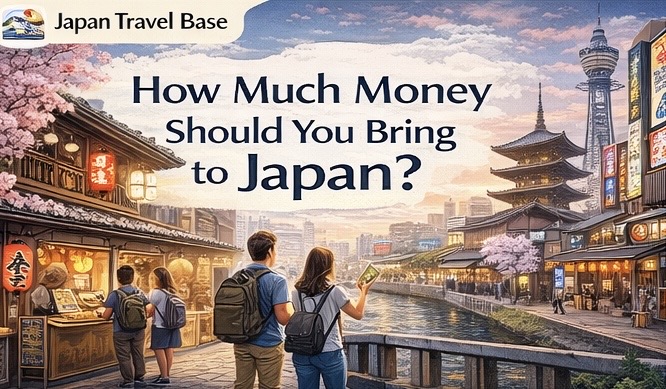
How Much Does a Trip to Japan Cost from Australia in 2026?
Wondering exactly how much a Japan holiday will set you back from Australia in 2026? A 2-week trip to Japan from Australia costs roughly AUD 4,500–9,000 per person all-in, depending on your travel style, departure city, and the season you choose. Budget backpackers can manage on AUD 3,500, while mid-range travelers should expect AUD 5,500–7,000, and those splurging on ryokans and omakase meals could easily spend AUD 10,000 or more. This breakdown gives you real, current 2026 numbers — not guesswork — so you can plan with confidence.
Note: all prices below are in Australian dollars (AUD) unless otherwise stated. Exchange rates fluctuate, but as of mid-2026, AUD 1 ≈ ¥96–102.
How Much Are Flights from Australia to Japan in 2026?
Flights are typically the biggest single expense in any Japan trip from Australia. Here’s what you can realistically expect to pay by departure city in 2026:
Flight Costs by Australian City
- Sydney (SYD) to Tokyo (NRT/HND): AUD 1,100–1,800 return in economy. Direct flights with Qantas and Japan Airlines run around 10–11 hours.
- Melbourne (MEL) to Tokyo: AUD 1,150–1,850 return. Similar options to Sydney, often via codeshare or 1-stop routing.
- Brisbane (BNE) to Tokyo: AUD 1,200–1,900 return. Slightly fewer direct options but still competitive fares.
- Perth (PER) to Tokyo: AUD 1,400–2,200 return. Perth is further and has fewer non-stop options, making it consistently pricier. Flying into Osaka (KIX) can sometimes save AUD 100–200.
- Adelaide, Cairns, or Darwin: Expect to add AUD 100–300 on top of the above, routing through Sydney, Melbourne, or a Southeast Asian hub.
Pro tip: Book 2–4 months in advance for the best economy fares. Booking during Japan’s peak seasons — cherry blossom (late March–April) and autumn foliage (mid-November) — can add AUD 300–600 to your flight cost. Flying into Osaka and out of Tokyo (or vice versa) on an open-jaw ticket often works out cheaper than returning from the same city and saves internal travel time.
How Much Does Accommodation Cost in Japan in 2026?
Japan offers an enormous range of accommodation, from AUD 25/night capsule hostels to AUD 1,000+/night luxury ryokans. Here are realistic nightly costs per room across the main categories:
Accommodation Price Ranges (per room, per night)
- Capsule hotel / hostel dorm: AUD 30–55 per person
- Budget business hotel (e.g. Toyoko Inn, APA Hotel): AUD 100–150
- Mid-range hotel (e.g. Dormy Inn, Richmond Hotel): AUD 150–230
- Upper mid-range (e.g. Remm Hotels, Vessel Hotel): AUD 230–350
- Luxury hotel (e.g. Park Hyatt Tokyo, Conrad Osaka): AUD 500–1,200+
- Traditional ryokan (with dinner and breakfast): AUD 300–900+ per person
For a 2-week mid-range trip, budget approximately AUD 2,100–3,200 total on accommodation (based on 13 nights at AUD 160–250/night for a double room). Shinjuku in Tokyo is one of the most convenient and cost-effective bases — it puts you next to a major transport hub with hotel options at every price point.
If you’re deciding which city to base yourself in during your trip, our guide to Tokyo vs Osaka vs Kyoto: Best Japan Travel Base by Trip Length can help you allocate your nights (and budget) strategically.
Japan Transport Costs: JR Pass vs IC Card in 2026
Getting around Japan is surprisingly affordable once you understand the system — but buying the wrong pass can waste hundreds of dollars.
JR Pass Prices for Australians in 2026
- 7-day JR Pass: approximately AUD 430–450
- 14-day JR Pass: approximately AUD 580–620
- 21-day JR Pass: approximately AUD 780–820
The JR Pass covers all Shinkansen (bullet train) travel on JR lines — including the Tokyo–Kyoto–Hiroshima–Osaka corridor — as well as many local JR trains, the Narita Express, and more. It pays for itself quickly on multi-city trips. For a standard 2-week itinerary covering Tokyo, Kyoto, Osaka, and Hiroshima, the 14-day pass is typically worth it.
If you’re staying mostly in one city or doing a shorter trip, an IC card (Suica or Pasmo) loaded with credit is usually cheaper for day-to-day travel. You can top up IC cards at any station machine and use them on almost all trains, buses, and even convenience stores. For a detailed comparison, see our JR Pass vs IC Card: Match Your Trip Type (2026) guide.
Estimated Transport Budget for 2 Weeks
- 14-day JR Pass: AUD 600
- IC card top-ups for local travel (subway, bus): AUD 80–120
- Airport transfers (if not covered by JR Pass): AUD 30–60
- Total transport (excluding flights): AUD 700–780
Food Costs in Japan: What to Budget Per Day
Food in Japan is one of the most exciting parts of the trip — and it doesn’t have to be expensive. Here’s a realistic daily food budget breakdown:
Daily Food Budget by Style
- Budget (convenience store meals, ramen, kaiten sushi): AUD 30–45/day
- Mid-range (sit-down restaurants, set lunches, izakayas): AUD 60–90/day
- Splurge (omakase, kaiseki, high-end teppanyaki): AUD 150–300+/day
Japan’s set lunch menus (teishoku) are exceptional value — you can eat a full meal with miso soup, rice, and a main dish at a quality restaurant for AUD 12–20. Dinner at a mid-range izakaya with drinks will run AUD 35–55 per person. For a 2-week trip, budget AUD 840–1,260 on food at the mid-range level.
Activities and Entrance Fees: What to Expect
Many of Japan’s best experiences are free or very cheap — temple gardens, free observation decks, public shrines, and wandering neighborhoods like Gion in Kyoto cost nothing. However, specific attractions do add up:
- Senso-ji Temple (Tokyo): Free
- Fushimi Inari (Kyoto): Free
- Hiroshima Peace Memorial Museum: AUD 2
- teamLab Planets (Tokyo): AUD 38–45
- Tokyo DisneySea / Disneyland: AUD 100–120 per adult
- Universal Studios Japan (Osaka): AUD 90–110 per adult
- Hakone Ropeway + Open Air Museum combo: AUD 40–55
For sightseeing ideas that balance cost and experience, check out our Kyoto 2-Day Itinerary: Temples, Gion & Arashiyama — most of the activities there are free or under AUD 10.
Budget approximately AUD 400–700 for 2 weeks of activities, depending on whether you include theme parks or special experiences.
Japan Trip Cost for a Family of 4: 2026 Real Breakdown
Traveling to Japan with kids is more affordable than many families expect, because Japan has strong child discounts built into its infrastructure.
Child Discounts in Japan
- JR trains (including Shinkansen): Children aged 6–11 pay 50% of adult fare. Under 6 travel free when not occupying a reserved seat.
- Most temples and museums: Children under 15 often enter free or at 50% discount.
- Domestic flights (within Japan): Children 3–11 typically pay 75% of adult fare.
- Kids’ meal sets (okosama lunch): AUD 8–15 at most family restaurants.
Sample 2-Week Family of 4 Budget (2 Adults + 2 Kids Aged 8 & 10)
- Flights (4 x AUD 1,400 avg from Melbourne): AUD 5,600
- Accommodation (13 nights, family rooms at AUD 250/night): AUD 3,250
- JR Pass (2 adult 14-day @ AUD 600 + 2 child @ AUD 300): AUD 1,800
- Food (4 people x AUD 55/day x 14 days): AUD 3,080
- Activities and entrance fees: AUD 1,500
- IC cards, local transport, misc: AUD 500
- Total: approx. AUD 15,730
With careful planning — using lunch specials, avoiding theme parks, and staying in well-priced family-friendly business hotels — a family of 4 can realistically do 2 weeks in Japan for AUD 14,000–18,000 all-in.
Japan Trip Cost by Season: When Is the Cheapest Time to Visit?
Timing your trip has a huge impact on overall cost. Here’s a quick guide:
Most Expensive Periods (expect 20–40% price premiums)
- Cherry blossom season: Late March to mid-April
- Golden Week: Late April to early May
- Autumn foliage: Mid-November
- Obon holidays: Mid-August
Most Affordable Periods
- January–February: Cold but very cheap, beautiful snow in Hokkaido and the Japan Alps
- June: Rainy season — not ideal for outdoor sightseeing but flights and hotels are significantly cheaper
- September: Summer heat fades, typhoon risk but good value overall
Visiting in shoulder season (late February or early October) gives you a sweet spot of good weather, manageable crowds, and lower prices. Japan’s overtourism measures introduced in 2025–2026 — including timed entry at popular sites and visitor caps at certain attractions — also mean that off-peak travel is genuinely more enjoyable now, not just cheaper.
2-Week Japan Trip from Australia: Complete AUD Budget Summary
Here’s a consolidated view of what to budget for a 2-week trip from Australia in 2026, across three traveler types:
- Budget traveler (hostels, convenience store meals, no JR Pass): AUD 3,500–4,500 per person
- Mid-range traveler (business hotels, restaurant meals, JR Pass): AUD 5,500–7,500 per person
- Comfort/luxury traveler (boutique hotels, ryokan nights, omakase): AUD 9,000–15,000+ per person
For a deeper per-day breakdown with real itinerary examples, visit our dedicated article: 2 Weeks in Japan Cost from Australia: AUD Breakdown 2026.
Paying in Japan: Cashless Tips for Australians in 2026
Japan’s payment landscape has changed significantly. As of 2026, credit and debit cards (Visa, Mastercard) are now accepted at the vast majority of hotels, restaurants, convenience stores, and major attractions. IC cards (Suica/Pasmo) work seamlessly on all transport and at most vending machines and convenience stores. PayPay and other QR payment apps are also widely available, though less practical for short-term visitors.
That said, carry some yen cash (AUD 200–300 equivalent) for smaller local restaurants, rural areas, temple donation boxes, and some traditional markets. Withdraw cash from 7-Eleven ATMs, which reliably accept Australian debit cards with low fees. Avoid airport currency exchange booths — the rates are consistently poor.
Frequently Asked Questions
How much does a 2-week trip to Japan cost from Australia in 2026?
A 2-week Japan trip from Australia typically costs AUD 4,500–6,500 per person on a mid-range budget, including return flights, accommodation, food, transport, and activities. Budget travelers can get by on AUD 3,500–4,500, while those wanting comfort and luxury should budget AUD 7,000–12,000+.
How much are flights from Australia to Japan in 2026?
Return flights from Sydney or Melbourne to Tokyo typically cost AUD 1,100–1,800 in economy class if booked 2–4 months ahead. Flights from Brisbane run AUD 1,200–1,900, while Perth to Tokyo is often pricier at AUD 1,400–2,200. Flying into Osaka (Kansai) can sometimes be cheaper and saves you an internal Shinkansen journey if your trip starts there.
Is Japan expensive for Australians in 2026?
Japan is moderately priced for Australians. Daily costs in Japan (excluding flights) typically run AUD 120–200 per person per day on a mid-range budget — comparable to or cheaper than domestic Australian travel. The AUD still offers reasonable purchasing power, particularly for food and local transport.
How much does a family of 4 trip to Japan cost from Australia?
A family of 4 (2 adults, 2 children under 12) should budget AUD 15,000–20,000 for 2 weeks all-in. Children receive 50% discounts on JR train travel, free or half-price entry at many attractions, and cheaper meal options at most restaurants. Family rooms at business hotels typically cost AUD 200–320 per night.
Is the JR Pass worth buying for Australians in 2026?
The 14-day JR Pass costs approximately AUD 600 in 2026 and is worth it if you travel between multiple cities. The Tokyo–Kyoto–Hiroshima–Osaka route alone nearly covers the cost. If you’re staying in one or two cities, an IC card is usually better value. See our full JR Pass vs IC Card guide for a detailed comparison.
What is the cheapest time of year for Australians to visit Japan?
January–February (excluding New Year), June (rainy season), and September are the cheapest months. Flights and hotels are noticeably lower during these periods. Avoid cherry blossom season (late March–April), Golden Week (late April–early May), and autumn foliage season (mid-November) if budget is your priority.
Do I need a visa for Japan as an Australian in 2026?
No. Australian passport holders can enter Japan visa-free for up to 90 days as of 2026. Simply ensure your passport is valid for the duration of your stay and pre-register via Japan’s Visit Japan Web portal for faster immigration processing on arrival.
Plan Your Japan Trip Today
Japan in 2026 is absolutely worth the investment — and with the right planning, it’s more accessible for Australians than ever before. Whether you’re a solo traveler keeping costs tight, a couple looking for a mix of culture and comfort, or a family wanting the full experience, Japan delivers extraordinary value at every budget level.
Start by locking in your flights early (especially from Perth or Brisbane where capacity is tighter), buy your JR Pass before you leave Australia, and pre-book accommodation during peak seasons. Use this guide as your baseline budget and adjust up or down based on your priorities.
Ready to build your itinerary? Check out our guide to Japan First-Timer Mistakes: Avoid These 10 Costly Errors (2026) to make sure every yen goes toward memories, not avoidable missteps. Your Japan adventure starts here.