

{
“@context”: “https://schema.org”,
“@type”: “FAQPage”,
“mainEntity”: [
{
“@type”: “Question”,
“name”: “What is the most famous street food in Dotonbori Osaka?”,
“acceptedAnswer”: {
“@type”: “Answer”,
“text”: “Takoyaki (octopus balls) is the most iconic Dotonbori street food, sold at stalls like Wanaka and Aizu for ¥500–700 per portion. Kushikatsu (deep-fried skewers) and okonomiyaki (savoury pancakes) are equally essential to a proper Osaka food crawl.”
}
},
{
“@type”: “Question”,
“name”: “How much does a Dotonbori street food crawl cost?”,
“acceptedAnswer”: {
“@type”: “Answer”,
“text”: “A filling evening food crawl through Dotonbori and Namba typically costs ¥2,000–3,500 per person (roughly $13–23 USD / $20–35 AUD) if you graze on four to five dishes rather than sitting down for full meals. It’s one of the cheapest ways to eat well in Japan.”
}
},
{
“@type”: “Question”,
“name”: “Is Kuromon Ichiba market good for street food?”,
“acceptedAnswer”: {
“@type”: “Answer”,
“text”: “Yes — Kuromon Ichiba is Osaka’s best morning street-food market, open from around 9am. Stalls sell fresh uni, grilled scallops, tuna sashimi on sticks, and fresh oysters. It’s best visited before 11am before tour groups arrive.”
}
},
{
“@type”: “Question”,
“name”: “What is the double-dipping rule for kushikatsu in Osaka?”,
“acceptedAnswer”: {
“@type”: “Answer”,
“text”: “At traditional kushikatsu restaurants, especially in Shinsekai, you must never dip a skewer into the communal tonkatsu sauce more than once. If you want more sauce, use a piece of cabbage to scoop it. Breaking this rule is considered very rude.”
}
},
{
“@type”: “Question”,
“name”: “What is 551 Horai butaman and where do I buy it?”,
“acceptedAnswer”: {
“@type”: “Answer”,
“text”: “551 Horai butaman are fluffy steamed pork buns that are an Osaka institution. You can buy them at the 551 Horai shops inside Namba station and near Dotonbori — look for the queue. A pack of two costs around ¥290 and they are best eaten hot on the spot.”
}
},
{
“@type”: “Question”,
“name”: “Is Dotonbori too crowded in 2026?”,
“acceptedAnswer”: {
“@type”: “Answer”,
“text”: “Dotonbori sees record tourist numbers in 2026 and is very busy on Friday and Saturday evenings. Weekday evenings from 5pm–7pm are far more manageable. Arriving early means shorter queues at popular stalls and better photos of the famous Glico running man sign.”
}
},
{
“@type”: “Question”,
“name”: “Where should I stay near Dotonbori for a street food trip?”,
“acceptedAnswer”: {
“@type”: “Answer”,
“text”: “Namba and Shinsaibashi are the best areas to stay for a Dotonbori food crawl — you can walk to every dish on this list in under 15 minutes. Budget guesthouses start around ¥3,500/night, mid-range hotels from ¥8,000–14,000, and there are excellent options on Booking.com.”
}
}
]
}
{
“@context”: “https://schema.org”,
“@type”: “TravelAction”,
“name”: “Travel to Japan — Osaka Street Food Crawl: Dotonbori and Beyond”,
“description”: “Takoyaki, kushikatsu, okonomiyaki — Dotonbori delivers Japan’s best street food in one walkable strip. Here’s exactly what to eat, where to find it, and how to plan your evening.”,
“toLocation”: {
“@type”: “Country”,
“name”: “Japan”
}
}
What to Eat in Dotonbori: The Direct Answer
Wondering what to eat on a Dotonbori street food crawl in Osaka? Start with takoyaki (octopus balls, ¥500–700), move to kushikatsu skewers (¥100–200 each), then finish with a steamed 551 Horai pork bun from Namba station. These three dishes alone capture what makes Osaka the undisputed street-food capital of Japan. Add okonomiyaki and kitsune udon and you have a legendary evening for under ¥3,500 — about $23 USD or $35 AUD.
Osaka has a word for its food obsession: kuidaore, which roughly translates as “eat until you drop.” Nowhere is this spirit more alive than along the Dotonbori canal and the surrounding Namba backstreets. In 2026, with record numbers of visitors coming to Japan, Dotonbori is busier than ever — but it still rewards those who know where to walk, what to order, and when to show up.
This guide gives you a practical, dish-by-dish walking route so you can hit every highlight in a single evening, plus tips on where to eat breakfast at Kuromon Ichiba market and where to find retro kushikatsu in Shinsekai.
Must-Eat Osaka Street Foods: What Each Dish Is and What to Pay
Takoyaki — Osaka’s Signature Snack (¥500–700)
Takoyaki are golf ball-sized wheat batter dumplings filled with chunks of octopus, pickled ginger, and tenkasu (tempura scraps), cooked in a dimpled iron griddle until crispy outside and molten inside. They’re finished with a dark Worcestershire-style sauce, Japanese mayo, bonito flakes, and dried seaweed.
In Dotonbori, Takoyaki Wanaka (on Dotonbori street itself) and Aizuya (one of the oldest takoyaki shops in Osaka, a short walk away) are the two most respected names. Expect to pay ¥500 for six pieces or ¥700 for eight. Don’t bite straight in — they stay dangerously hot inside for several minutes.
Okonomiyaki — Savoury Pancake, Osaka Style (¥900–1,300)
Okonomiyaki is often described as a Japanese savoury pancake, but it’s denser and more satisfying than that sounds. The Osaka version (Kansai-style) mixes shredded cabbage, egg, flour batter, and your choice of pork, seafood, or cheese into one thick round, then grills it on a teppan plate. It’s topped with the same sauces as takoyaki plus a drizzle of mayo in a lattice pattern.
Mizuno, on the Dotonbori strip, is the most famous okonomiyaki restaurant in the area and often has a short queue. Sit at the counter and watch the chefs work. For a less touristy experience, try the smaller shops in the backstreets of Amerika-Mura, a five-minute walk north. Prices run ¥900–1,300 for a full pancake.
Kushikatsu — Deep-Fried Skewers with the Sacred No Double-Dip Rule (¥100–200/skewer)
Kushikatsu are breadcrumbed, deep-fried skewers of meat, seafood, and vegetables — beef, pork, lotus root, quail egg, asparagus wrapped in bacon, and dozens of other combinations. Each skewer costs ¥100–200, which makes it easy to spend happily as a group.
The golden rule — and it is taken seriously — is no double-dipping into the communal tonkatsu sauce pot. Dip once. If you want more sauce, use the provided cabbage leaves as a scoop. You will see signs reminding you of this rule in English at every kushikatsu restaurant.
The spiritual home of kushikatsu is Shinsekai, a retro neighbourhood about 15 minutes south of Dotonbori by foot or one stop on the subway. The narrow streets here are lined with old-school kushikatsu joints lit by flickering neon signs. Daruma is the most famous chain, but smaller family-run spots around Tsutenkaku Tower are equally good and less crowded. For a food tour that takes you here with a local guide, check out the Klook Osaka food tours below.
[klook_activity id=”osaka-street-food-tour”]
Kitsune Udon — The Comforting Bowl You Shouldn’t Skip (¥600–900)
Kitsune udon originated in Osaka and is still done best here. Thick, slippery udon noodles sit in a light, intensely dashi-flavoured broth, topped with a piece of aburaage — sweet, soy-glazed deep-fried tofu. It’s warming, subtle, and a perfect palate reset between richer dishes.
Imai Honten, a traditional udon restaurant inside the Dotonbori arcade, has been serving the definitive Osaka kitsune udon since 1947. A bowl costs around ¥750 and the quality is exceptional. This is a sit-down dish, so save it for when you need a break from walking.
551 Horai Butaman — The Pork Bun That Osakans Are Obsessed With (¥145/bun)
Ask any Osaka local what they always buy at the station and they’ll say 551 Horai butaman — a soft, thick-skinned steamed bun filled with juicy, gingery minced pork. These are sold fresh and hot from 551 Horai shops inside Namba station (south exit) and on the street near Dotonbori. A single bun costs ¥145; a pack of two is ¥290. The queue moves quickly. Eat them immediately — they are transcendent hot, unremarkable cold.
Morning Option: Kuromon Ichiba Market for Seafood Breakfast
If you want to extend your Osaka food crawl into the morning, Kuromon Ichiba — nicknamed “Osaka’s Kitchen” — is a 580-stall covered market a 10-minute walk east of Dotonbori. It opens around 9am and the seafood stalls are at their best before 11am, before tour groups arrive.
Look for: fresh oysters on ice (¥200–350 each), grilled Hokkaido scallops with butter and soy, tuna sashimi on a stick, and sea urchin (uni) scooped into a cone. It’s more of a grazing experience than a sit-down meal. Bring cash as some stalls don’t accept cards, though IC cards and PayPay are increasingly accepted at Kuromon in 2026.
Kuromon pairs perfectly with a visit to Namba Yasaka Shrine nearby — a striking shrine with a giant lion-head stage — before the street-food crowds build up.
Your One-Evening Dotonbori Street Food Walking Route
This route works best on a weekday evening, starting around 5:30pm to avoid the worst of the weekend crowds that pack Dotonbori by 7pm in 2026.
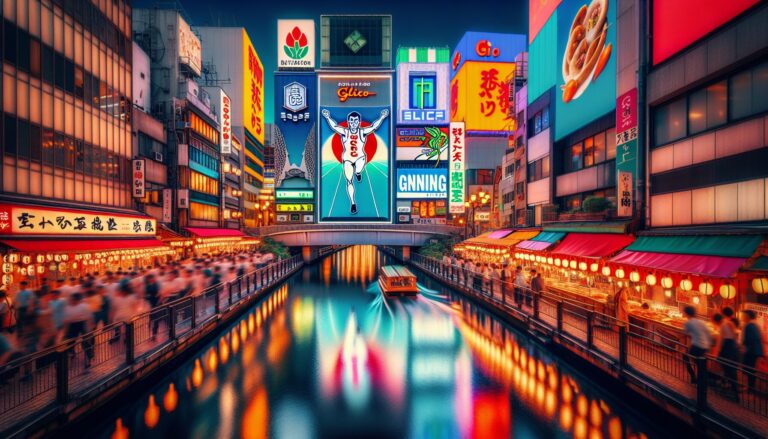
- 5:30pm — Start at Dotonbori Canal (west end): Walk east along the canal path from the Tazaemon Bridge. Take in the Glico running man sign and the giant mechanical crab above Kani Doraku restaurant. This is the photo stop everyone wants.
- 5:45pm — Takoyaki at Wanaka or Aizu: Grab a tray of six to eight takoyaki. Eat on the canal railing. Budget ¥600.
- 6:15pm — Okonomiyaki at Mizuno: Head into the Dotonbori arcade covered shopping street. If Mizuno has a queue, consider the smaller shops on the parallel backstreet to the north. Budget ¥1,100.
- 7:00pm — Kitsune udon at Imai Honten: A short walk further along the arcade. Sit, rest your feet, and enjoy the broth. Budget ¥750.
- 7:45pm — Shinsekai for kushikatsu: Take the Midosuji subway line one stop south to Dobutsuen-mae, or walk 20 minutes through Namba. Order five to eight skewers per person at Daruma or a local spot. Remember: no double-dipping. Budget ¥1,000.
- 9:00pm — 551 Horai pork bun at Namba station: Head back to Namba station and join the queue at 551 Horai for a hot butaman nightcap. Budget ¥290 for two buns.
Total estimated cost per person: ¥3,740 (approx. $25 USD / $38 AUD). This is one of the best-value food experiences anywhere in Japan — and it’s one of the reasons Osaka consistently wins the base-city argument for budget travellers. For more on why Osaka makes such a strong case as your Japan home base, see our comparison of Tokyo vs Osaka vs Kyoto: Best Japan Travel Base by Trip Length.
Where to Stay Near Dotonbori: Namba and Shinsaibashi Hotels
Staying within walking distance of Dotonbori means you can roll out of bed for morning market visits and stumble back after a late kushikatsu session without worrying about last trains. The best areas are Namba (loudest and most central) and Shinsaibashi (slightly calmer, excellent shopping, 10 minutes walk north of Dotonbori).
In 2026, hotel prices in Namba reflect Osaka’s booming tourism — budget guesthouses and capsule hotels start around ¥3,500–5,000/night, solid mid-range business hotels run ¥8,000–14,000, and boutique hotels with canal views push toward ¥20,000+. Book well ahead for weekends and public holidays when Osaka is at full capacity.
Planning your overall Japan accommodation and travel budget? Our Japan Trip Cost from Australia 2026: Exact Budget Guide breaks down daily costs city by city, including realistic Osaka numbers.
Practical Tips for Eating Through Dotonbori in 2026
- Timing matters: Weekday evenings from 5–7pm are the sweet spot. Weekend nights from 7pm onward see Dotonbori packed shoulder-to-shoulder.
- Cashless is now widely accepted: Most Dotonbori stalls and restaurants now accept IC cards (Suica/ICOCA), PayPay, and major credit cards. Carry some cash (¥3,000–5,000) as a backup, especially for small takoyaki carts and Kuromon market stalls.
- Allergies: Many dishes contain wheat, shellfish, and bonito (fish) — always ask if you have serious allergies. Google Translate’s camera function works well on Japanese menus in 2026.
- No eating while walking: This is culturally frowned upon in Japan, even in tourist-heavy Dotonbori. Most stalls have a small standing area to eat in front of the shop — use it.
- Guided food tours: If you’d rather have a local show you the ropes, Klook’s Osaka street food tours are excellent value and include hidden spots most tourists miss.
- Add Universal Studios Japan: If you’re spending a few days in Osaka, USJ is a 15-minute train ride from Namba. Book tickets in advance on Klook to avoid sellouts, which are increasingly common in 2026.
[klook_activity id=”universal-studios-japan-tickets”]
One common mistake first-time visitors make is assuming Dotonbori is the only place to eat in Osaka — it’s the flashiest, but the real depth is in the backstreets. Don’t miss our article on 10 Japan First-Timer Mistakes to Avoid (2026) for a broader look at the missteps that cost travellers time and money.
Frequently Asked Questions
What is the most famous street food in Dotonbori Osaka?
Takoyaki (octopus balls) is the most iconic Dotonbori street food, sold at stalls like Wanaka and Aizu for ¥500–700 per portion. Kushikatsu (deep-fried skewers) and okonomiyaki (savoury pancakes) are equally essential to a proper Osaka food crawl.
How much does a Dotonbori street food crawl cost?
A filling evening food crawl through Dotonbori and Namba typically costs ¥2,000–3,500 per person (roughly $13–23 USD / $20–35 AUD) if you graze on four to five dishes rather than sitting down for full meals. It’s one of the cheapest ways to eat well in Japan.
Is Kuromon Ichiba market good for street food?
Yes — Kuromon Ichiba is Osaka’s best morning street-food market, open from around 9am. Stalls sell fresh uni, grilled scallops, tuna sashimi on sticks, and fresh oysters. It’s best visited before 11am before tour groups arrive in force.
What is the double-dipping rule for kushikatsu in Osaka?
At traditional kushikatsu restaurants — especially in Shinsekai — you must never dip a skewer into the communal tonkatsu sauce more than once. If you want more sauce, use a piece of cabbage to scoop it out. Breaking this rule is considered very rude and signs reminding you in English are posted everywhere.
What is 551 Horai butaman and where do I buy it?
551 Horai butaman are fluffy steamed pork buns that are an Osaka institution. You can buy them at 551 Horai shops inside Namba station and near Dotonbori — look for the queue. A pack of two costs around ¥290 and they are best eaten hot on the spot.
Is Dotonbori too crowded in 2026?
Dotonbori sees record tourist numbers in 2026 and is very busy on Friday and Saturday evenings. Weekday evenings from 5pm–7pm are far more manageable. Arriving early means shorter queues at popular stalls and better photos of the famous Glico running man sign.
Where should I stay near Dotonbori for a street food trip?
Namba and Shinsaibashi are the best areas to stay for a Dotonbori food crawl — you can walk to every dish on this list in under 15 minutes. Budget guesthouses start around ¥3,500/night, mid-range hotels from ¥8,000–14,000, and there are excellent options on Booking.com for all budgets.
Plan Your Japan Trip Today
Osaka’s street food scene is one of the greatest bargains in all of travel — a full evening of Japan’s most iconic dishes for under $25 USD. Whether you’re planning a quick two-night stop or basing yourself in Osaka for a week, Dotonbori rewards every type of traveller.
Start by locking in flights into Kansai International Airport (KIX) — check live deals above — then book your Namba hotel early, especially if you’re travelling in spring (cherry blossom season) or autumn (October–November), when Osaka reaches peak capacity in 2026. Add a Klook food tour or Universal Studios Japan ticket, and your Osaka days are sorted.
Still deciding whether Osaka or Tokyo should be your Japan base? Our detailed comparison — Tokyo vs Osaka vs Kyoto: Best Japan Base by Traveler Type — will help you make the call based on your exact trip length and travel style. Now get out there and eat until you drop.